
A Tragedy That Accelerated the Collapse of the Totalitarian Regime
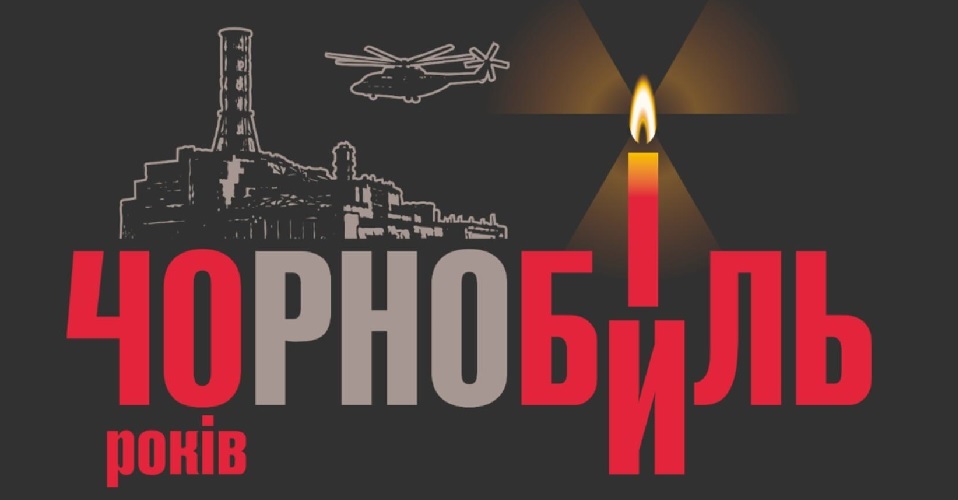
April 26, 1986, marks the day of the largest man-made disaster in human history. During an experiment at the 4th reactor of the Chernobyl Nuclear Power Plant, two explosions occurred. A cloud of radioactive dust was released into the Earth's atmosphere. The wind carried dangerous radioactive isotopes northwest, where they settled on the ground and seeped into the water. In terms of the number of victims, Ukraine ranks first among the former republics of the Soviet Union. Belarus accounted for about 60% of the harmful emissions. Russia also suffered significantly from radioactive contamination. A powerful cyclone carried radioactive substances across the territories of Lithuania, Latvia, Poland, Sweden, Norway, Austria, Finland, Great Britain, and later Germany, the Netherlands, and Belgium.
Forty years have passed since the accident at the Chernobyl NPP, yet its consequences are still discussed by the global scientific community. According to UNSCEAR and the WHO, the Chernobyl disaster is classified as a nuclear facility accident of the highest level. Historians emphasize the political responsibility of the communist regime, which, for the sake of ideological interests, jeopardized the lives and health of millions of citizens. Due to design flaws, construction violations, and the use of low-quality building materials, such a man-made disaster became inevitable. The criminal concealment of information by the authorities, on one hand, deepened the irreparable negative consequences of the accident, and on the other, catalyzed environmental and national-democratic movements, which ultimately led to the collapse of the USSR.
The accident at the Chernobyl NPP led to public health and demographic issues, as well as irreparable economic, social, and humanitarian consequences. In terms of environmental impact, the accident escalated into a planetary catastrophe: 3/4 of Europe's territory was contaminated with radioactive cesium.
At that time, the Soviet Union had proclaimed glasnost (openness). However, the emergency at the Chernobyl NPP proved the falsity of these slogans. Realizing that an environmental disaster of such scale would have negative consequences for the communist regime, the USSR leadership chose a course of silence, and all information about the disaster was immediately placed under the ideological control of the CPSU and the KGB.
The Chernobyl tragedy demonstrated the state leadership's unreadiness to subordinate political interests to the humanistic values of human life and health. To demonstrate that there was supposedly no radiation danger, the party leadership did not cancel the May Day parade. Five days after the accident, hundreds of thousands of people, including schoolchildren, were led onto Khreshchatyk Street. The next day, all newspapers were filled with festive reports. Meanwhile, the Ministry of Health only managed to issue extremely cautious advice regarding safety measures on May 9!
The Ukrainian diaspora showed a high level of civic engagement and activity following the Chernobyl accident. They organized demonstrations, prepared appeals to Western governments, and collected materials about the tragedy. In September 1986, the Foreign Branch of the Ukrainian Supreme Liberation Council made significant efforts to bring the Chernobyl issue to the consideration of the UN.
The Chernobyl disaster became one of the catalysts for the collapse of the USSR. Moscow's attempts to hide the truth about its consequences, along with insufficient safety measures and aid for victims, shook the faith in the "humanity" of the communist idea even among the most loyal supporters. The Soviet government demonstrated a blatant lack of responsibility for people's lives.
In the post-accident period, environmental and national-democratic movements intensified, primarily in Ukraine. On April 26, 1988, the first unauthorized demonstration took place in Kyiv under the slogans: "NPPs Out of Ukraine," "UCC – for a Nuclear-Free Ukraine," "We Don't Want Dead Zones," "NPPs – to a Referendum," "Industry, Land, Water – Under Ecological Control," and "A Personal Dosimeter for Everyone." In many regions, both in the east and the west, people took to the streets to protest the construction of new and the operation of old nuclear power plants. It was around the issue of the nuclear disaster that the first public organizations were formed, which later turned into a political force, such as "Green World" and the "Chernobyl" Union.
The Chernobyl Disaster in Figures and Dates
In 1977, the first unit of the Chernobyl NPP was launched.
The fourth power unit of the Chernobyl NPP operated for 2 years – it was launched at full capacity in 1984. It was the "youngest" and most modern reactor.
For 2 days, the world knew nothing about the explosion.
30 NPP employees died as a result of the explosion or acute radiation sickness within a few months of the accident.
500,000 people died from radiation, according to estimates by independent experts.
8.5 million residents of Ukraine, Belarus, and Russia received significant doses of radiation in the days immediately following the accident.
90,784 people were evacuated from 81 settlements in Ukraine by the end of the summer of 1986.
More than 600,000 people became liquidators of the accident – fighting the fire and clearing the debris.
2,293 Ukrainian cities and towns with a population of approximately 2.6 million people were contaminated with radioactive nuclides.
200,000 square kilometers – the area affected by radiation. Of this, 52,000 square kilometers are agricultural lands.
10 days – from April 26 to May 6 – the release of activity from the damaged reactor continued at the level of tens of millions of Curies per day, after which it decreased a thousandfold. Specialists call this period the active stage of the accident.
11 tons of nuclear fuel were ejected into the atmosphere as a result of the accident at the 4th power unit of the Chernobyl NPP.
400 species of animals, birds, and fish, and 1,200 species of flora continue to exist in the "exclusion zone," where human habitation is prohibited due to significant and catastrophic contamination of air, soil, and water.
From April 26 to October 1986, the Chernobyl NPP did not operate. In October 1986, the 1st and 2nd power units were put back into operation; in December 1987, the 3rd unit resumed work. The 4th power unit never operated again.
1991 – a fire occurred at the 2nd power unit, resulting in the shutdown of this reactor.
December 1995 – signing of a memorandum between Ukraine, the G7 countries, and the European Union Commission, under which preparations began for a program to completely close the plant.
December 15, 2000 – the Chernobyl Nuclear Power Plant was shut down completely.
September 2010 – the foundation was laid for the new sarcophagus over the destroyed 4th power unit; in April 2012, construction began on the arch intended to cover the "Shelter"; in October 2011, construction of the Centralized Spent Sealed Radiation Sources Storage Facility began at the "Vector" complex site.
November 29, 2016 – the sliding of the arch over the 4th power unit was completed.
February 14, 2025 – a Russian strike drone of the "Shahed" type (Geran-2) damaged the confinement structure of the 4th power unit of the Chernobyl NPP.