
General Overview of the Scientific School
The scientific school of Serhiy Valeriyovych Yepifanov is an established research direction in the field of aircraft engine engineering, based on many years of research and teaching activities by Doctor of Technical Sciences, Professor S.V. Yepifanov. The school’s activities focus on fundamental and applied research of current issues in control, parametric diagnostics, and resource monitoring of gas turbine engines for aviation and ground applications.
Founder of the Scientific School
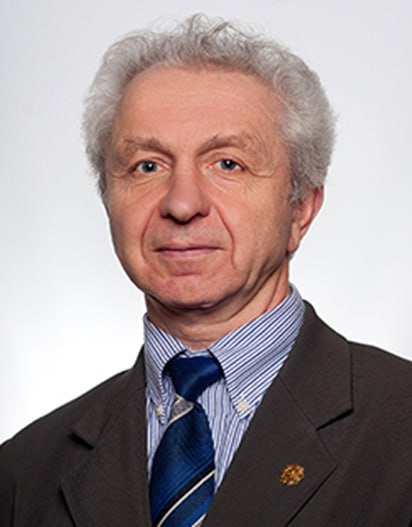
Serhiy Valeriyovych Yepifanov (born November 13, 1951, Ukraine) — Ukrainian scientist, Doctor of Technical Sciences (2001), Professor (2003), Honored Scientist of Ukraine, Academician of the Engineering Academy of Ukraine, Head of the Department of Aircraft Engine Design at the National Aerospace University “Kharkiv Aviation Institute”.
Main Research Directions of the School
1. Modeling the dynamics of power plant processes, their systems and components.
2. Development of methods and algorithms for determining unmeasurable engine parameters for use in control and diagnostic systems.
3. Development of methods and algorithms for parametric diagnostics of power plants, their systems, and components.
4. Development of methods and algorithms for operational monitoring of the designed service life of aircraft engines.
Scientific Achievements and Results
Under the scientific supervision of S.V. Yepifanov, one doctoral, nine candidate, and three PhD dissertations in the field of aircraft engine engineering have been defended. Members of the scientific school actively participate in production, research, and teaching activities at enterprises and educational institutions in Ukraine.
Key Publications and Research Projects of the School
The founder of the scientific school has published over 450 scientific and educational-methodical works. The most significant results of the school’s activities include:
1. Software and methodological tools for supporting the development, testing, and operation of modern automatic control systems using dynamic mathematical models of various complexity and speed, identified from measured parameters. Elements of these technologies have been implemented at Ivchenko-Progress JSC, Motor-Sich JSC, Elektroavtomatika Design Bureau (Zaporizhzhia), Antonov JSC, NTK “Electronprylad” (Kyiv), Polisvit SKB R&D, Kharkiv KB, FED JSC (Kharkiv), Element JSC (Odesa) in the creation and modification of control systems for engines TV3-117VMA-SBM1, TV3-117VMA-SBM1V, AI-22, AI-222, AI-222K-25F, AI-322, D-436T1, D-436TP, D-436-148, D-27, D-18T, D-18TM, AI9-3B, AI-450, AI-450MS, D-336, MS-350, MS-400, and others, as well as in other countries.
2. Methods and algorithms for parametric diagnostics of aviation and ground gas turbine engines, as well as compressor equipment. These methods have been implemented in onboard diagnostic systems such as BASK-124 (D-18T engine, An-124 aircraft), BSCD-27 (D-27 engine, An-70 aircraft), BUK-140 (TV3-117VMA-SBM engine, An-140 aircraft), BUK-148 (D-436-148 engine, An-148 aircraft), BSCD-90 (PS-90 engine, Il-96 and Tu-204 aircraft), BSCD-K (NK-93 engine), as well as a number of ground diagnostic flight data processing systems. On behalf of Compressor Controls Corporation (USA), a universal diagnostic complex for gas turbine drives and compressor equipment was created and implemented in dozens of units in many countries.
3. Information technology for creating operational monitoring systems of the designed service life of major engine components, consisting of methods, models, and analysis algorithms, as well as approaches for adaptation to specific engines. This technology has been implemented in software suites for monitoring the service life of engines such as D-336, D-27, D-18T, D-436TP, AI-450MS, D-436-148, TV3-117VMA-SBM1V series 1.
Scientific Community and Continuity
Students
Dissertations for Doctor of Technical Sciences degree
1. Kravchenko, I.F. Concepts of engine design and development for training-combat aircraft, specialty 05.05.03 – Engines and Power Plants (2015).
Dissertations for Candidate of Sciences / PhD degree
1. Potemkin, V.A. Special Topic, specialty 05.07.05 – Aircraft engines and power plants (1984).
2. Loboda, I.I. Improving the reliability of aviation GTDs by optimizing the diagnostic system according to accuracy criteria, specialty 05.07.05 – Aircraft engines and power plants (1994).
3. Shirkov, V.T. Diagnostics of the technical condition of aviation gas turbine engines based on oil system working parameters, 05.07.05 – Aircraft engines and power plants (2004).
4. Volkov, D.I. Determination of turboprop engine power based on measured thermogasdynamic parameters, 05.07.05 – Aircraft engines and power plants (2006).
5. Ishchuk, V.P. Formation of thrust characteristics of turbofan engines during aircraft landing modes, specialty 05.05.03 – Engines and Power Plants (2008).
6. Oliynyk, A.O. Information technology for structural-parametric identification of GTD systems based on adaptive multicomponent models, specialty 05.13.06 – Information Technologies (2009).
7. Sirenko, F.F. Identification of gas turbine engine characteristics in the startup region, specialty 05.05.03 – Engines and Power Plants (2014).
8. Shevchenko, M.V. Determination of unmeasurable integral parameters of aviation gas turbine engines, specialty 05.05.03 – Engines and Power Plants (2015).
9. Maravillya, E.K. Improving the accuracy of determining boundary conditions of heat transfer for monitoring turbine blade life of aviation engines, specialty 05.05.03 – Engines and Power Plants (2016).
10. Ohanyan, I.V. Determination of the technical condition of a turboprop fuel regulator based on factory tests, specialty 05.05.03 – Engines and Power Plants (2025).
11. Podhorsky, K.V. Improving torque determination methods using tools embedded in aviation gas turbine engine design, specialty 05.05.03 – Engines and Power Plants (2025).
12. Bondarenko, O.V. Formation of onboard self-adjusting dynamic models of gas turbine engines to determine unmeasurable working process parameters (2025).
The topics of dissertations conducted within the scientific school demonstrate its comprehensive, interdisciplinary, and practically-oriented character. The main directions of the school include the theory and methodology of modeling working processes of gas turbine engines and their systems, correlating models with experimental data to create digital twins, parametric diagnostics, and resource monitoring. Significant attention is given to modern methods and software tools for implementing diagnostic and control algorithms in ground-based and onboard systems, as well as adapting these approaches to specific engine types and power plants. Members of the scientific school actively participate in editorial boards of leading scientific journals and specialized dissertation defense councils.
Recognition and Authority of the Scientific School
The high authority of the scientific school is confirmed by state awards, professional distinctions, and active participation of its members in the creation of new aviation technology models.
Awards and Distinctions:
1. In 2009, S.V. Yepifanov was awarded the honorary title “Honored Scientist of Ukraine”.
2. In 2015, S.V. Yepifanov received the “Excellence in Education” badge from the Ministry of Education of Ukraine.
3. In 2020, S.V. Yepifanov was awarded the Certificate of Honor by the Verkhovna Rada of Ukraine for special services to the Ukrainian people.
4. In 2025, S.V. Yepifanov received the highest award of the Engineering Academy of Ukraine – the A.M. Pidhorny Medal.