
The first scientific school at the Department of Higher Mathematics was established by Doctor of Physical and Mathematical Sciences, Professor V. S. Protsenko.
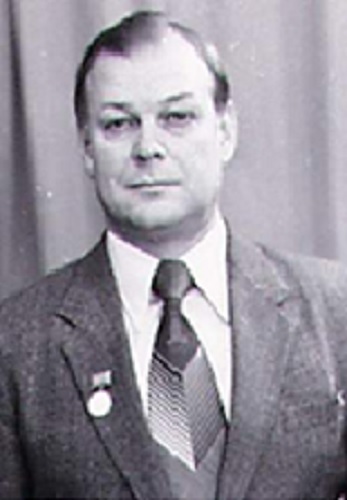
By 1980, he had completed a complex of important research on the structural method, which was reflected in his two monographs: "Contact Problems of the Theory of Elasticity for Non-Classical Domains" (co-authored with V. L. Rvachov, 1977) and "The Theory of R-functions and Current Problems of Applied Mathematics" (collective of authors, 1986). For these studies, V. S. Protsenko, together with a team of scientists led by V. L. Rvachov, was awarded the State Prize of Ukraine in the Field of Science. The subsequent scientific work of V. S. Protsenko was connected with the creation of a method for solving boundary value problems of mathematical physics for spatial doubly connected domains based on the addition theorems of basic harmonic functions in various pairs of identically directed curvilinear coordinate systems with a common origin. He proposed a method for finding such theorems based on the uniqueness theorem of harmonic functions. The scientific school of Professor V. S. Protsenko includes Doctor of Physical and Mathematical Sciences O. H. Nikolaiev, Candidates of Physical and Mathematical Sciences O. V. Holovchenko, I. M. Dorosh, P. T. Koshchavets, O. I. Soloviov, Candidate of Technical Sciences O. O. Skybin, senior lecturers Ye. P. Tomilova, N. A. Ukrainets, V. V. Tsymbaliuk, and D. I. Yaresko. Over his 50 years of work at the department, Volodymyr Sydorovych authored and co-authored three monographs and more than 150 scientific articles, most of which were published in leading journals in Ukraine and abroad.
Within the framework of Professor V. S. Protsenko's scientific school, we should also highlight the research conducted in the 2000s by Associate Professor O. I. Soloviov, in which the generalized Fourier method was extended to plane problems of the theory of elasticity. The specific nature of two-dimensional problems allowed Oleksandr Ivanovych to obtain several exact or asymptotically exact solutions for doubly connected problems of this type.
The diversity of the department's scientific research areas from the 1970s to the present day has been significantly fostered by the active scientific work of Professor V. O. Rvachov.
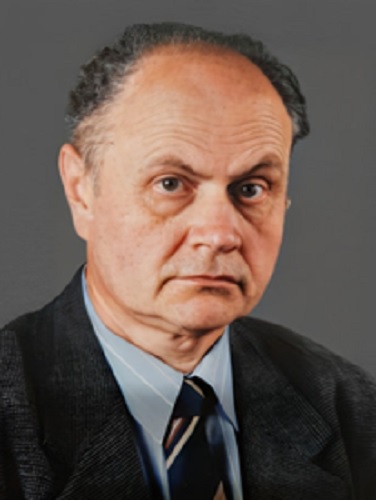
Professor V. O. Rvachov made a fundamental contribution to the non-classical approximation theory by creating the theory of atomic functions. Professor V. O. Rvachov defined an atomic function as an infinitely differentiable solution with a compact support of a certain functional-differential equation, a research problem presented to him by Academician V. L. Rvachov. As it turned out, although atomic functions do not belong to the class of quasi-analytic functions, they possess, in a certain sense, optimal properties regarding the approximation of specific classes of functions, making them widely applicable. The main results of V. O. Rvachov's research were published in the most prestigious mathematical journal of the USSR, "Uspekhi Matematicheskikh Nauk" (1990). In 1991, he defended his doctoral dissertation.
Among Professor V. O. Rvachov's students who worked or are currently working at KhAI in this field are Doctor of Physical and Mathematical Sciences V. M. Kolodiazhnyi, Candidates of Physical and Mathematical Sciences V. A. Afanasiev, V. M. Kuznichenko, V. O. Makarichev, I. I. Malytskyi, T. V. Rvachova, H. O. Starets, senior lecturers S. I. Zabara, Yu. A. Ivanov, Yu. F. Sereda, and postgraduate student O. A. Ivanova. Based on the outcomes of Professor V. O. Rvachov's scientific school, three monographs have been published: "Atomic Functions and Approximation Theory" (co-authored with V. L. Rvachov, 1978), "Non-Classical Methods of Approximation Theory in Boundary Value Problems" (co-authored with V. L. Rvachov, 1979), and "The Theory of R-functions and Current Problems of Applied Mathematics" (collective of authors, 1986). In addition, over 100 scientific articles have been published in leading journals in Ukraine and abroad, and several dozen reports have been delivered at all-union and international conferences. Scientific monographs, textbooks, and reference books published in Great Britain, Canada, the USA, France, Germany, Japan, and other countries contain references to the scientific works of this school's representatives.
An important direction of research within the scientific school of Professor V. O. Rvachov was developed in the late 2010s by Associate Professors V. O. Makarichev and I. V. Brysina.
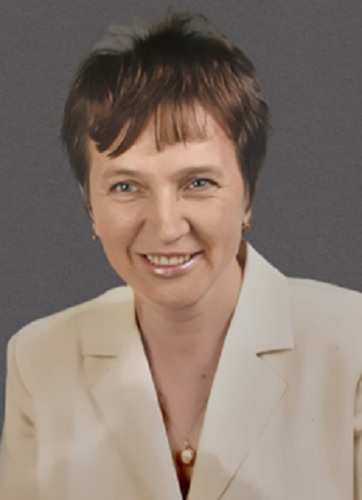
This research area is connected with the application of the atomic function theory to wavelet theory and digital image compression algorithms. Having completed a complex of scientific research on the theory of atomic functions, approximation theory, and the theory of generalized Taylor series, V. O. Makarichev found important practical applications for atomic functions. Notably, V. O. Makarichev and I. V. Brysina not only created efficient discrete atomic compression algorithms but also implemented them into computer software, making it possible to achieve compression characteristics that preserve image quality at levels unattainable by traditional approaches. This project was recognized at several presentation forums (KhAI Innovate 2018; 134 Startup Battle, Kyiv, 2019; Festival of Innovations, Kyiv, 2019; Innovation Market, Kyiv, 2019).
Since the late 1990s, another scientific school emerged at the department under the leadership of Professor O. H. Nikolaiev.
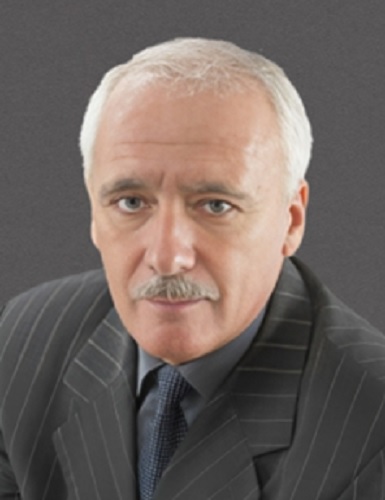
Starting from the mid-1980s, he carried out a comprehensive set of studies that formed the basis of a new method for solving boundary value problems of elasticity theory – the generalized Fourier method. Within the framework of these studies, the following milestones were achieved: vector basic solutions of the Lamé equation were constructed in all spatial canonical simply connected domains; a methodology for validating these solutions was developed and executed; a new method for finding addition theorems of basic harmonic functions in various pairs of curvilinear coordinate systems was designed on the basis of a proposed class of their integral representations by integrals along the real axis with kernels in the form of special functions; addition theorems for the constructed solutions of the Lamé equation were obtained in all possible canonical pairs of curvilinear coordinate systems for cases when they are identically directed and their origins coincide or are arbitrarily shifted in space relative to each other or the axes are rotated. Similar results were obtained for multiply connected canonical transversely isotropic bodies.
The conducted research formed the core of O. H. Nikolaiev's doctoral dissertation (1997) and the monograph "Generalized Fourier Method in Spatial Problems of Elasticity Theory" by O. H. Nikolaiev and V. S. Protsenko (2011).
The generalized Fourier method was further advanced in the 2000s in the works of O. H. Nikolaiev and his students K. P. Barakhov, S. M. Vozniuk, K. Yu. Korolkov, S. S. Kuriennov, Ye. M. Orlov, Ye. A. Tanchyk, and Yu. A. Shcherbakova, in which the method was extended to specific classes of boundary value problems of thermoelasticity and elasticity of isotropic and transversely isotropic multiply connected bodies.
The next research impulse based on the generalized Fourier method in the 2010s prompted O. H. Nikolaiev and Ye. A. Tanchyk to establish a new direction in the mechanics of deformable solids, which the authors termed the elastic mechanics of multicomponent bodies. In this scope, boundary value problems for the Lamé equation were examined in multiply connected domains with a large number of connectivity components that form both regular and irregular structures in an elastic space. This research was compiled into the joint monograph "Elastic Mechanics of Multicomponent Bodies" (2014).
In 2015, S. S. Kuriennov defended his doctoral dissertation, laying the foundation for the formation and further development of a scientific school for the design of laminated structures, particularly adhesive joints, at the Department of Higher Mathematics and System Analysis. The scientific school focused on developing theoretically grounded and practically significant methods for the analysis and optimal design of adhesive joints in complex engineering structures. In 2021, the candidate dissertation of K. P. Barakhov was defended under the supervision of S. S. Kuriennov.
In the 2020s, the scientific school of Professor O. H. Nikolaiev continued to operate productively. Within a few years, together with postgraduate students A. S. Krainychenko and M. V. Skitska, he developed methods for modeling stationary thermoelastic fields in multicomponent bodies, created a new method for solving optimal control problems for distributed systems, developed methods for analyzing multiply connected transversely isotropic bodies with periodic sets of cracks and anticracks, and rigorously substantiated the standard and generalized Fourier methods for certain types of boundary value problems of elasticity theory for isotropic and transversely isotropic bodies.
In 2025, postgraduate students A. S. Krainychenko and M. V. Skitska successfully defended their dissertations to obtain the Doctor of Philosophy degree in Applied Mathematics.

Over the 25 years of its existence, the school of Professor O. H. Nikolaiev has published more than 110 articles, fifteen of which are indexed in Scopus, delivered more than 80 reports at over 40 conferences, published two monographs, and seen the defense of one doctoral dissertation, two candidate dissertations, and two PhD dissertations. From 2003 to 2014, representatives of the scientific school carried out four fundamental research projects funded by the Ministry of Education and Science of Ukraine.
The further development of the scientific school led to an expansion of its research spectrum: starting from 2022, a new direction was formed, dedicated to the use of genetic algorithms in topological, structural, and parametric optimization problems.
To date, the scientific results of the school are presented in over 40 publications in collections of scientific papers indexed in the Scopus and/or Web of Science databases, 10 of which have been published in Q1–Q2 quartile journals. More than 20 articles have been published in specialized scientific publications of Ukraine. The school's achievements also include one monograph and two utility model patents.
In 2022–2024, within the activities of the scientific school, a fundamental research project funded by the Ministry of Education and Science of Ukraine was carried out: "Optimal Design of Adhesive Joints in Composite Structures of Aerospace Engineering" (State Reg. No. 0122U001784).
Over various years, D. Dvoretska, O. H. Poliakov, and other scientists from the department have been involved in the scientific research.
The further evolution of the scientific school is linked with research in the field of mathematical modeling and optimization of cold gas-dynamic spraying processes, implemented within the department's scientific projects. In particular, in 2024–2025, the department participated in the execution of the project "Development of Technology and Equipment for Cold Gas-Dynamic Spraying" (State Reg. No. 0124U000553), and since 2025, a project for young scientists has been implemented: "Development of Comprehensive Technology for Creating Wear-Resistant Coatings Based on NiTi and TiAl Intermetallics on Titanium Alloy Parts" (D204-1/2025-M, 2025–2027 – project leader N. V. Savchenko). A continuation of this direction is the project "Innovative Cold Gas-Dynamic Spraying Technologies for Rapid Production and Repair of Critical Aerospace Components" (D204-3/2026-M, 2026–2028 – principal investigator N. V. Savchenko).
Within the scope of these studies, since 2025, under the supervision of Candidate of Physical and Mathematical Sciences, Associate Professor, and Head of the Department Nina Valeriivna Savchenko, the training of postgraduate student Maksym Oleksandrovych Shchekolda has been conducted. The topic of his dissertation is "Methods and Algorithms for Optimization of Gas-Dynamic Processes of Two-Phase Flow in Supersonic Nozzles." The research is aimed at developing mathematical models and optimization algorithms for gas-dynamic flow parameters, which is a key element of cold gas-dynamic spraying technologies and directly provides scientific support for the execution of the specified projects.