
Oleg CHERANOVSKY Scientific School of Physical Simulation in Flight Research
General Overview of the Scientific School
Since 1959, the scientific school of physical simulation in flight research has been active at the Kharkiv Aviation Institute (KhAI), now the National Aerospace University "Kharkiv Aviation Institute". Initially, it was established based on the Department of Flight Research of Radio-Controlled Models (LIRUM) under the Aircraft Design Department (KhAI Order No. 283 of June 24, 1959), and later incorporated the Industry Research Laboratory (ONIL-3) in 1978. In 1989 (KhAI Order No. 161), due to the high relevance of the ongoing work, LIRUM and ONIL-3 were reorganized into the Research Institute for Flight Dynamics Problems (NII PFM). From the very beginning, the school's primary scientific activity was directed toward conducting support and advanced flight research on the flight regimes of various aircraft for multiple design bureaus. This was achieved through the physical simulation of all flight regimes critical to both aircrews and aircraft structures using Dynamically Scaled Free-Flying Models (DSFFM) under real-world flight conditions. Data obtained via DSFFM allowed for the evaluation of flight characteristics, design adjustments, and the optimization of aerodynamic configurations at the earliest stages of aircraft development.
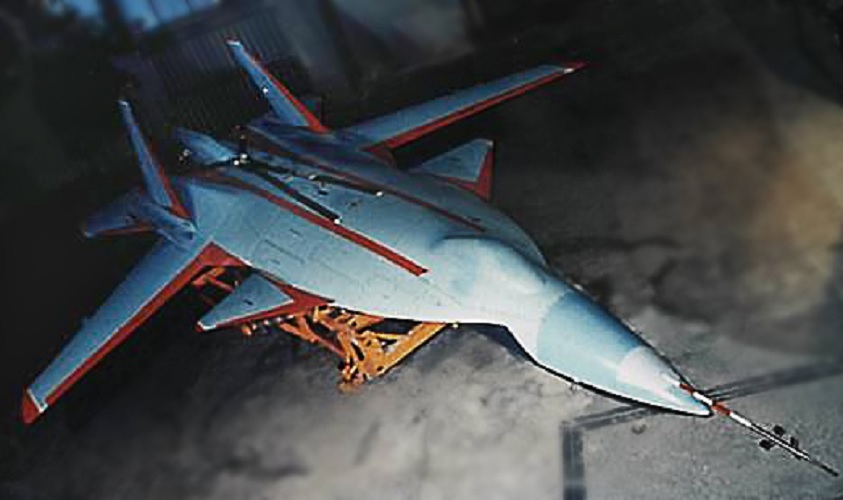
DSFFM of a next-generation aircraft developed and built at the NII PFM
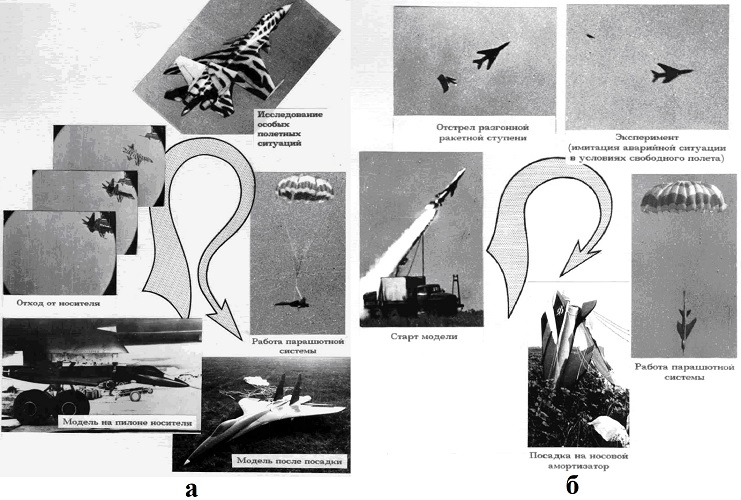
Experiment schemes: launch from a manned carrier (a) and a ground-based launcher (b)
Founder of the Scientific School
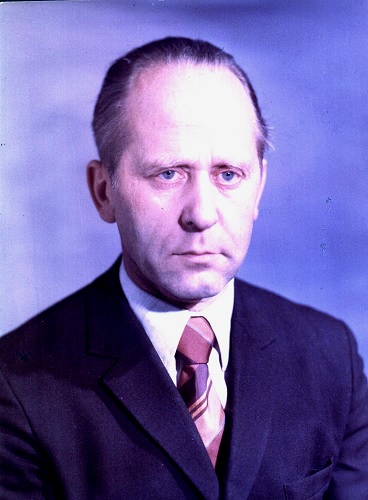
The founder of the scientific school, Oleg Romanovich Cheranovsky (20.06.1927 – 27.01.2016), was a distinguished researcher, Doctor of Technical Sciences, Laureate of the State Prize of Ukraine in Science and Technology, and Honorary Aircraft Builder of the USSR.
In 1959, he was appointed Scientific Director of LIRUM. From 1978, he served as the head of LIRUM and ONIL-3, and from 1989 to 1999, he was the Director of NII PFM.
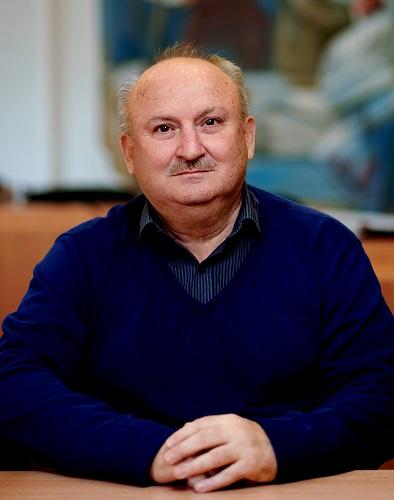
The current development of the school is led by Alexander Vladimirovich Betin, Doctor of Technical Sciences, Professor at the Department of Rocket Engineering Design and Construction at the National Aerospace University "KhAI", and Laureate of the State Prize of Ukraine in Science and Technology.
Main Scientific Directions of the School:
1. Scientific foundations of similarity theory for creating DSFFM and conducting flight research on them. Ensuring required DSFFM quality.
2. Theoretical and methodological foundations for the design and construction of DSFFM.
3. Technical feasibility and manufacturing methods for DSFFM.
4. Theoretical and methodological foundations for ground-based testing of DSFFM. Calibrating DSFFM parameters to meet similarity requirements.
5. Numerical simulation in DSFFM quality assessment tasks.
6. Theoretical and methodological foundations for DSFFM flight testing.
7. Theoretical and methodological foundations for the development of propulsion systems and on-board DSFFM systems.
8. Design and construction of ground support equipment and DSFFM launchers.
9. Organization of the scientific and technical infrastructure for DSFFM creation and the testing range for flight research.
10. Recording flight parameters of DSFFM, data processing, analysis, and formulation of conclusions based on flight research results.
Current Scientific Directions of the School:
1. Physical simulation of the landing process of parachute platforms onto inflatable air cushions.
2. Required geometric parameters for inflatable air cushions of parachute platforms for bench-top dynamically scaled models.
3. Theoretical foundations of physical simulation for the descent and landing process of guided systems for precision aerial cargo delivery.
4. Parameters and characteristics of parachute systems in the physical simulation of precision aerial cargo delivery.
Scientific Achievements and Results
Staff members of the NII PFM have defended the following degrees within the school's research scope:
Doctor of Technical Sciences (Dr. Sc. in Engineering):
1. O. R. Cheranovsky
2. O. I. Ryzhenko
3. O. V. Betin
Candidate of Technical Sciences (Ph.D. in Engineering):
1. S. M. Sadovnychyi
2. I. V. Kaluzhinov
3. I. I. Bulgakov
4. V. O. Cheranovsky
5. D. O. Betin
6. O. Yu. Betina
7. A. Shakouri
O. I. Ryzhenko and O. V. Betin have received the academic rank of Professor.
For the implementation of the proactive flight research method using DSFFM into domestic aircraft engineering practice, the Director of NII PFM, O. R. Cheranovsky, was awarded the title of "Honorary Aircraft Builder of the USSR."
Twenty-four NII PFM staff members were awarded Certificates of Honor by the Ministry of Aviation Industry of the USSR.
By Decree of the President of Ukraine No. 811/94, the 1994 State Prize of Ukraine in Science and Technology was awarded to a team of NII PFM staff at KhAI for developing a highly effective, economical, operational, and high-precision method for determining the flight behavior of newly developed aircraft in the most critical flight regimes. The Laureates of the State Prize of Ukraine are: O. R. Cheranovsky (Director of NII PFM, Dr.Sc., Honorary Aircraft Builder of the USSR), O. I. Ryzhenko (Head of the Advanced Research Department, Dr.Sc.), V. I. Ryabkov (Deputy Director for Science, Dr.Sc.), Chief Designers V. D. Belyi, V. O. Yatsenko, S. A. Yashin, as well as staff members O. V. Betin (Ph.D.) and S. M. Sadovnychyi (Ph.D.).
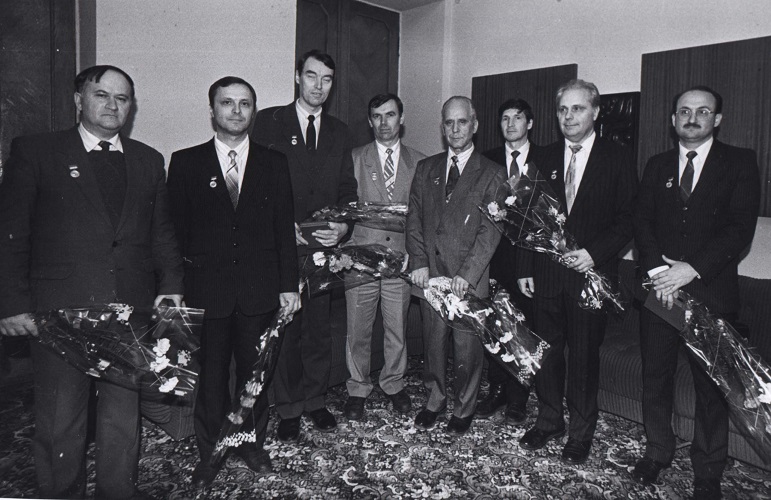
Laureates of the 1994 State Prize of Ukraine in Science and Technology (left to right): V. D. Belyi, S. A. Yashin, O. I. Ryzhenko, S. M. Sadovnychyi, O. R. Cheranovsky, V. O. Yatsenko, V. I. Ryabkov, O. V. Betin.
Main Publications and Research Projects
NII PFM researchers and engineers have authored approximately 300 articles and obtained over 150 patents (author's certificates) within the school's research field.
Practical Results of the School's Activities
Throughout the history of the scientific school and NII PFM, over 30 unmanned flying laboratories and dynamically scaled models have been created. These have been used to conduct over 300 flights for comprehensive research into problems of aerodynamics, flight dynamics, stability, and controllability. This also included the testing of on-board equipment and the behavior of models during super-maneuverable regimes in various configurations: stalling, spin entry, spin recovery, and unsteady oscillatory spinning.