
General Characteristics of the Scientific School
The scientific school of Ihor Turkin is a prominent research direction in the field of Information Technology, specifically in the design, testing, and operation of complex critical software and hardware systems. The school's activities focus on establishing theoretical foundations and practical tools for the automated testing of aerospace equipment, risk management in software projects, and the implementation of "Green IT" technologies.
Founder of the Scientific School
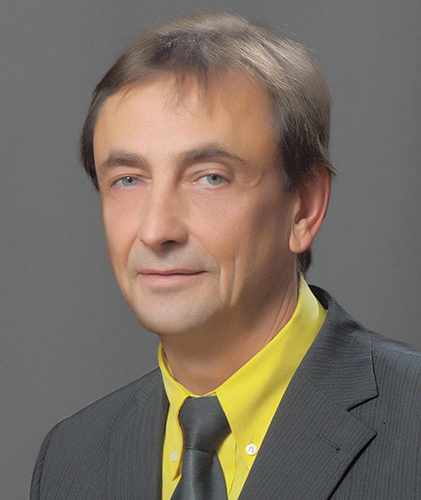
Ihor Turkin – Ukrainian scientist, Doctor of Technical Sciences, Professor, and Head of the Software Engineering Department at the National Aerospace University "Kharkiv Aviation Institute". His scientific career is dedicated to developing high-reliability software and automation systems for the aerospace industryі.
Main Scientific Directions of the School:
1. Information Technologies for Automated Testing of complex technical complexes (particularly power supply systems for spacecraft).
2. Software Engineering for Critical Systems, including methods for ensuring data reliability and relevance.
3. Intelligent Decision Support Systems and risk management in software projects based on fuzzy logic.
4. Computer Visualization of Control Algorithms and optimization of human-machine interaction.
5. Adaptive Energy-Saving Scheduling and Green Computing (Green IT) for portable and personal computers.
Scientific Achievements and Activities
Under the scientific supervision of I.B. Turkin, numerous PhD dissertations in "Information Technology" have been prepared and defended. The school's scientific results have been implemented at major aerospace enterprises such as Yuzhnoye Design Office and Hartron-Arkos, as well as leading IT companies like Sigma Software. The most significant achievements include the development of problem-oriented languages for describing technological testing processes and the creation of intelligent software lifecycle management systems.
Main publications and scientific projects of the school
The founder of the scientific school has published more than 100 scientific, educational and methodological works. The most significant results of the scientific school are:
1. Liubimov O., Turkin I. Experimental study of FreeRTOS operating system reactivity in power saving modes of the onboard computer microcontroller // Aerospace Technic and Technology. – 2024. – № 4. – С. 71–86. – DOI: https://doi.org/10.32620/aktt.2024.4.09.
2. Liubimov O., Volobuyeva L., Turkin I. Experimental evaluation of the efficiency of containerization technology in the onboard software of a nanosatellite CubeSat // Aerospace Technic and Technology. – 2024. – № 4. – С. 87–103. – DOI: https://doi.org/10.32620/aktt.2024.4.10.
3. Turkin I. B., Liubimov O. V., Volobuieva L. O., Valkovyi V. S. Hardware and software of cubesat nanosatellites` on-board computers: a systematized literature review. Aerospace Technic and Technology. 2025. Vol. 3, P. 116-137. URL: https://doi.org/10.32620/aktt.2025.3.11 (date of access: 03.11.2025).
4. Liubimov, O., Turkin, I., Cheranovskiy, V., & Volobuieva, L. (2024). UAV Mission Computer Operation Mode Optimization Focusing on Computational Energy Efficiency and System Responsiveness. Computation, 12(12), 235. https://doi.org/10.3390/computation12120235;
5. Turkin I. B., Volobuieva L. O., Chukhray A. G., Liubimov O. V. Comparison of equivalent circuit and machine learning methods for CubeSat battery discharge modeling. Radioelectronic and Computer Systems. 2025. Vol. 3, P. 231-244. URL: https://doi.org/10.32620/reks.2025.3.16 (date of access: 20.11.2025).
6. Leznovskyi, V., Nabizade, A., Turkin, I. (2025). Model-Oriented Approach to Vibration Diagnostic Systems. In: Lytvynov, O., Pavlikov, V., Krytskyi, D. (eds) Integrated Computer Technologies in Mechanical Engineering - 2024. ICTM 2024. Lecture Notes in Networks and Systems, vol 1473. Springer, Cham. https://doi.org/10.1007/978-3-031-94845-9_8
7. Liubimov, O., Turkin, I., Volobuieva, L., Iovenko, I., Liubimov, M. (2025). Developing Hardware and Software for UAV Onboard Computers: A Combined Approach with SWOT Analysis. In: Lytvynov, O., Pavlikov, V., Krytskyi, D. (eds) Integrated Computer Technologies in Mechanical Engineering - 2024. ICTM 2024. Lecture Notes in Networks and Systems, vol 1473. Springer, Cham. https://doi.org/10.1007/978-3-031-94845-9_18
8. Turkin, I., Liubimov, O., Volobuieva, L., Valkovyi, V. (2025). Expert Evaluation of Serial Interfaces Effectiveness for Unmanned Aerial Vehicles Onboard Networks. In: Lytvynov, O., Pavlikov, V., Krytskyi, D. (eds) Integrated Computer Technologies in Mechanical Engineering - 2024. ICTM 2024. Lecture Notes in Networks and Systems, vol 1473. Springer, Cham. https://doi.org/10.1007/978-3-031-94845-9_22
9. Turkin I., Zakharenko V. The MAAS digital ecosystem as a new paradigm of urban transportation // Global Scientific Trends: Economics and Public Administration. – 2025. – Vol. 4, No. 4. – DOI: 10.5281/zenodo.17512229. – URL: https://gst-journal.net.ua/index.php/gst/article/view/62/60
10. Liubimov O., Turkin I. CubeSats and their On-Board Computers: Systematic Literature Review. Space Science and Technology. 2025. 31, No. 6. P. 014 - 037.
11. Turkin, I., Liubimov, O., & Volobuieva, L. (2025). Reactivity model of nanosatellite and UAVS embedded computing systems. Aerospace Technic and Technology, 0(6), 128–142. doi: https://doi.org/10.32620/aktt.2025.6.12
Scientific Community and Continuity
Candidates of Technical Sciences / PhD):
P. O. Luchshev – Information technology for automated testing of spacecraft power supply systems (2009).
Ye. V. Sokolova – Information technology for ensuring data reliability and relevance in testing complex technical systems (2010).
L. V. Mandrikova – Information technology for decision support in risk management for critical software projects (2013).
Yu. A. Kuznetsova – Visualization of control algorithms in an automated testing system for a complex technical complex (2015).
S. S. Al-Khshab – Model, method, and information technology for energy-efficient task scheduling in battery-powered mobile computing devices (2016).
O. V. Vdovitchenko – Methods and technologies of human-centered personal computers adaptive power control (2016).
The subject matter of the dissertation research conducted within the scientific school reflects its comprehensive, interdisciplinary, and practically oriented nature, covering a wide range of issues in the design and operation of information systems. The main directions of the school include the automation of testing for complex technical complexes, particularly for aerospace applications, software engineering for critical systems, intelligent risk management based on fuzzy logic, and computer visualization of control algorithms and human-machine interaction. Significant attention is paid to modern technological challenges, specifically the issues of "Green IT" (Green Computing), energy-saving task scheduling for mobile devices, ensuring data reliability and relevance in real-time systems, and enhancing the reliability and adaptability of software-hardware tools under resource constraints. Representatives of the scientific school actively participate in publishing research results in leading scientific periodicals, such as "Radioelectronic and Computer Systems" and "Aerospace Technic and Technology".
Recognition and authority of the scientific school
The high authority of the scientific school is confirmed by state awards, professional distinctions, and the active participation of its representatives in shaping scientific achievements in the field of information technology at the state level.
Awards and Honors:
1. Laureate of the State Prize of Ukraine in the field of science and technology for a cycle of works on the creation of power supply systems for spacecraft
2. Diploma of the Kharkiv Regional Council
3. Diploma of Honor of the Kharkiv City Council