
The Center for Collective Use of Scientific Equipment "Creation and Research of Aerospace Objects and Systems" of the National Aerospace University "Kharkiv Aviation Institute" has the following equipment:
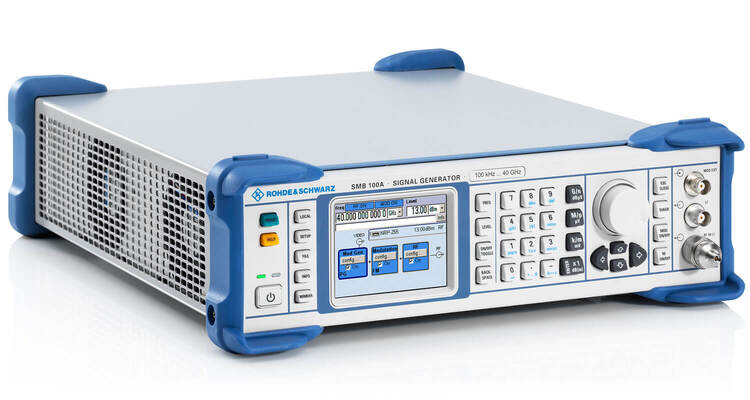
R&S SMB100A-B140 Signal Generator
| The R&S SMB100A signal generator with option B140 is designed for generating microwave oscillations in the frequency range from 100 kHz to 40 GHz. In addition to sinusoidal signals, it also generates the most common analog signals with amplitude, frequency, and phase modulation. The device can be used to generate pulsed signals. The presence of a mechanical step attenuator with system step adjustment allows for rapid frequency or output power level switching. The low settling time of the measuring instrument's parameters contributes to increased productivity. The device can be controlled using software installed on a computer. Key technical specifications:
|   |
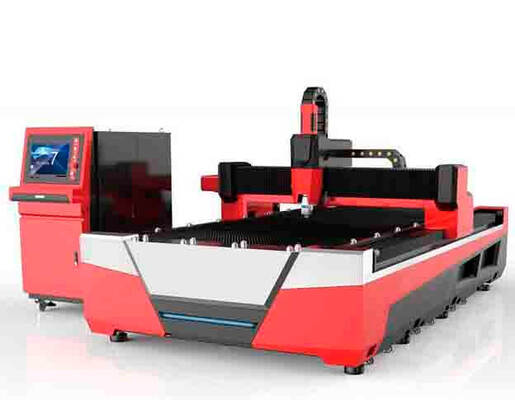
CNC Milling Machine with Additional Laser Equipment
| Technical specifications:
|   |
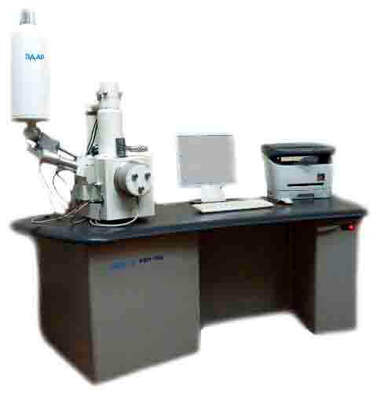
REM-106 Scanning Electron Microscope with Low-Vacuum Chamber and EDX Microanalysis System
| Designed for studying the surface relief of various solid-phase objects and determining the elemental composition of objects using X-ray microanalysis based on characteristic radiation quantum energies in two modes: high and low vacuum. In the regulated low-vacuum mode, the microscope, using a high-efficiency backscattered electron detector, enables the study of dielectric samples whose images in high vacuum are distorted by the accumulation of charge from the primary electron beam. In low-vacuum mode, images of semiconductors, ceramics, polymers, glass, wood, paints, and other non-conductive materials can be obtained without prior sputter coating. Observation of objects in secondary electrons provides topographic contrast, while backscattered electrons provide elemental contrast. The instrument allows for qualitative and quantitative elemental analysis of the investigated area of the object. There is an option to automatically conduct studies of changes in element concentration along a line specified by the operator. Key technical specifications:
|  |
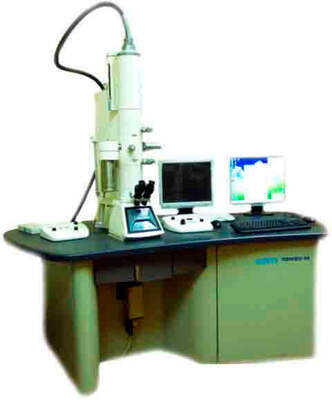
PEM 100-01 Transmission Electron Microscope with Mini-lenses
| Designed for research on the microstructure and phase composition of objects, providing visual observation and photography of object images across a wide range of magnifications, and obtaining diffraction patterns from objects. Key technical specifications:
|   |
NEOPHOT-30 Large Reflected-Light Photomicroscope
| NEOPHOT-30 (Carl Zeiss) reflected-light optical microscope for studying the surface structure of solid-state samples. Designed for metallographic and ore microscopy, and creating photographs in the magnification range from 10x to 2000x. Observation can be performed using brightfield and darkfield methods, as well as in polarized light. | 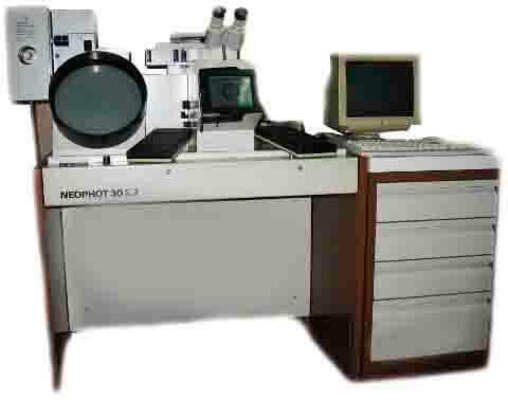 |
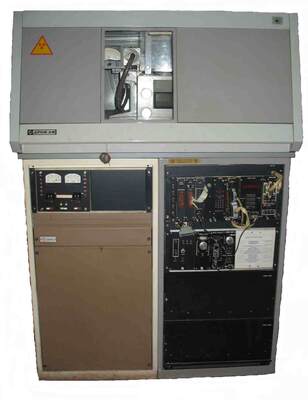
DRON-3M
| DRON-3M is an X-ray diffractometer designed for a wide range of X-ray structural studies of various crystalline materials, including determining the type and parameters of the crystal lattice. |
|
.jpg)
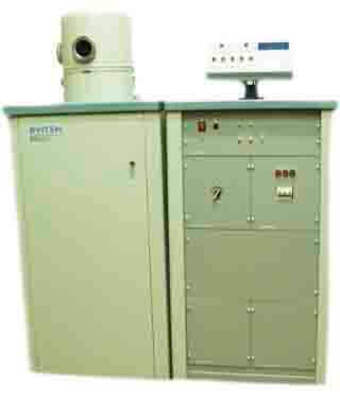
VUP-5M Universal Vacuum Station
| The VUP-5M universal vacuum station is designed to achieve the vacuum level in the working volume necessary for applying films of various materials using magnetron, resistive, and electron evaporation methods, as well as plasma etching of materials and preparing objects studied with an electron microscope.
|   |
UZDN-A Ultrasonic Disintegrator
| Designed for preparing objects from fibrous, crystalline, powdered, and other substances for electron-microscopic research in biology, chemistry, medicine, mineralogy, metallurgy, and other scientific fields. In addition to its main purpose, the disintegrator can be used to obtain suspensions and emulsions from various substances and to clean small parts from mechanical contamination. |  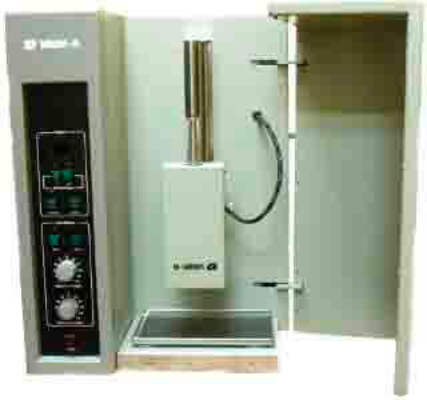 |
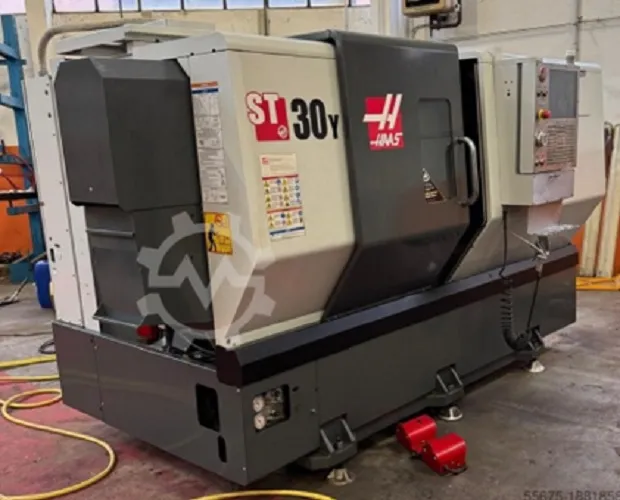
HAAS ST-30Y-NGC Turning and Milling Center
| The HAAS ST-30Y NGC turning center is designed for high-precision turning and milling of parts made of metallic and other structural materials. Technical specifications of the equipment:
|  |
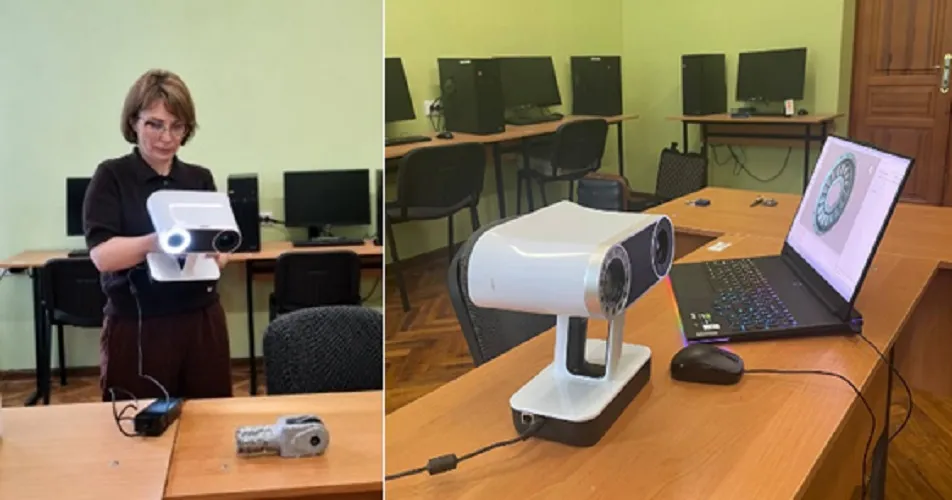
ARTEC Leo 3D Scanner
| Technical specifications of the 3D scanner:
|  |