
А1. General Provisions
A1.1. The Regulations on the Work of the Academic Council of the National Aerospace University “Kharkiv Aviation Institute” (hereinafter – the Regulations) establish the procedure for preparing and conducting meetings, define the procedure for reviewing issues related to the powers and control functions of the University’s Academic Council.
A1.2. The procedure for the Academic Council’s work and the fundamentals of organizing its activities are defined by the Laws of Ukraine “On Education,” “On Higher Education,” “On Scientific and Scientific-Technical Activity,” the orders and directives of the Ministry of Education and Science of Ukraine, the University Charter, the Regulations on the Academic Council of the National Aerospace University “Kharkiv Aviation Institute” (hereinafter – the Regulations on the Academic Council), and these Regulations.
A1.3. Venue and Language of Academic Council Meetings:
A1.3.1. Meetings of the Academic Council are held at the address: 17 Vadym Manka Street, Kharkiv, Main Building of the University, 2nd floor, Academic Council Meeting Hall (Room 231), except in cases when meetings are conducted remotely. By decision of the Academic Council Chair, meetings may be held at another location.
A1.3.2. Academic Council meetings are conducted in the state language. Individual speeches, presentations, etc., may be delivered in English or another language, except the language of an aggressor state.
A1.4. Academic Council meetings are open and public.
A1.4.1. Openness of meetings is ensured by allowing participation of University staff and students.
A1.4.2. Publicity of meetings is ensured by publishing the agenda and adopted decisions of the Academic Council, including on the official University website and/or in the internal University network.
A1.4.3. Members of the Academic Council must be invited to the meetings, and, if necessary, other persons directly concerned with the agenda items. University staff and students may attend the meetings upon prior agreement with the Chair of the Academic Council, provided it does not disrupt the normal work of the Council (taking into account the capacity of the meeting hall).
A1.5. The provisions of this section apply taking into account the specifics outlined in Section A8 of the Regulations.
А2. Exercise of Powers by the Academic Council
A2.1. The powers of the Academic Council are defined in Section 2 of the Regulations on the Academic Council. The exercise of powers by the leadership and members of the Academic Council is also ensured by the procedures established in these Regulations.
A2.1.1. The Chair of the Academic Council:
– On behalf of the Rector, represents the Academic Council in interactions with state authorities, external organizations, and public associations;
– Leads and coordinates the work of the Academic Council, directs its activities to ensure educational, scientific, scientific-pedagogical, international, and organizational activities of the University, and monitors the implementation of Council decisions;
– Signs minutes and extracts from minutes of Academic Council meetings;
– For the purpose of implementing decisions made at meetings, initiates and organizes the issuance of relevant orders and directives;
– Exercises other powers provided by the Charter, the Regulations on the Academic Council, and these Regulations.
A2.1.2. Secretary of the University Academic Council:
– On the basis of the instructions of the Chair of the Academic Council, drafts the agenda for the Academic Council meeting and informs all participants;
– Ensures the preparation of meetings, including compiling materials necessary for implementing the agenda, coordinating them with the Chair of the Academic Council, and publishing them for review in the University’s internal Internet network;
– At the initiative of the Rector, the Chair of the Academic Council, or at the initiative of at least thirty percent of the Academic Council members, together with the Chair, ensures the convening and preparation of an extraordinary meeting of the Academic Council;
– Is responsible for forming attestation files for candidates for academic titles;
– On the instruction of the Chair of the Academic Council, monitors the implementation of the Academic Council’s decisions;
– Coordinates operational reporting on the work of the Academic Council, publishes adopted decisions in the prescribed manner on the official University website and in the University’s internal network.
In the absence of the University Academic Secretary performing the duties of the Academic Council Secretary, these responsibilities are assigned to another member of the Academic Council by order of the Rector.
A2.1.3. Members of the Academic Council, in addition to the duties specified in the Regulations, also:
– Ensure unity and collegiality of the Academic Council’s activities, bear joint responsibility for decisions and their implementation, the state of affairs in University structural units they represent at Academic Council meetings;
– Submit proposals for forming the plan and agenda of Academic Council meetings according to the procedures established by the Regulations;
– Prepare materials for Academic Council meetings according to the work plan in the manner established by these Regulations.
A2.2. The exercise of powers by the leadership and members of the Academic Council in directing activities, coordinating, and controlling the implementation of Academic Council decisions is carried out on principles that prevent duplication or substitution of functions of the heads of the relevant University structural units.
A2.3. The provisions of this section are applied taking into account the specifics outlined in Section A8 of the Regulations.
А3. Forms of Work of the Academic Council
A3.1. The organizational form of the Academic Council’s work is meetings (regular and extraordinary). In connection with the celebration of significant dates or important events, extended Academic Council meetings may also be held.
A3.2. The Chair of the Academic Council announces the opening of the meeting at the beginning and the closing after the last agenda item is considered and the minutes of the counting commission are approved.
A3.3. Regular meetings of the Academic Council are held according to the work plan once a month during the academic year, usually on the penultimate Wednesday of each month.
A3.4. The Chair of the Academic Council, or in their absence, one of the Deputy Chairs, may, if necessary, decide to change the date and time of the meeting. Members of the Academic Council are informed about rescheduled regular meetings or extraordinary meetings via phone messages and/or emails, and may also be informed through the official University website, internal network, corporate chat “Academic Council KAI,” and email, no later than one working day before the meeting.
A3.5. The provisions of this section are applied taking into account the specifics outlined in Section A8 of the Regulations.
А4. Work Plan of the Academic Council
A4.1. To properly fulfill its tasks and powers outlined in Section 2 of these Regulations, the Secretary of the Academic Council prepares a draft work plan for the Academic Council meetings for the academic year (semester), taking into account the proposals of the Rector, Vice-Rectors, Chair of the Academic Council, as well as proposals from structural units and individual members of the Academic Council, submitted no later than 20 calendar days before the start of the new academic year (semester).
A4.2. The work plan is approved by the Rector of the University. Changes to the approved work plan, if necessary, are made in accordance with the procedure specified in A4.1 of these Regulations and adopted in agreement with the Chair of the Academic Council following the procedure for approving the Academic Council work plan.
A4.3. The Academic Council’s work plan for the current academic year (semester) must be published on the University’s official website.
А5. Preparation for Academic Council Meetings
A5.1. Materials for a regular Academic Council meeting must be submitted to the Secretary of the Academic Council no later than five (5) working days before the meeting. The Secretary, in agreement with the Chair of the Academic Council, prepares the agenda and ensures that the members are familiarized with it no later than two (2) working days before the meeting.
A5.2. Responsibility for the timely and high-quality preparation of materials for the Academic Council meeting lies with the heads of structural units or other University staff designated as speakers in the agenda. Materials submitted after the deadline may be included in the agenda only by decision of the Chair of the Academic Council.
A5.3. Materials for a regular Academic Council meeting that contain draft local normative acts of the University, including draft regulations on certain types of University activities, structural units, typical job descriptions, etc., must be preliminarily approved by the Legal Department and discussed with members of the Academic Council no later than five (5) working days before the meeting at which the document is planned for consideration and approval.
A5.4. Materials for a regular Academic Council meeting containing draft decisions that establish, change, or terminate the financial rights and obligations of the University must be preliminarily approved by the Planning and Finance Department and the Chief Accountant.
A5.5. Materials submitted to the Secretary of the Academic Council for a regular meeting must include:
– Analytical (report) notes on each agenda item with justification for the proposals (attachments if necessary);
– Draft decisions indicating tasks, deadlines, structural units, and officials responsible for overall control of implementation, agreed with the executors;
– Draft orders and directives provided for by the Academic Council decisions;
– List of persons invited to the Academic Council meeting, including full name, academic degree, academic title, position, and place of work.
Draft decisions and other materials for the Academic Council meeting must be signed and endorsed in the prescribed manner.
A5.6. Minutes of the Academic Council meeting are kept, recording the progress and results of the meeting.
A5.7. Refinement of the Academic Council decisions, taking into account the remarks and proposals of its members, is carried out by the persons who prepared the corresponding drafts within five (5) working days, unless the Academic Council establishes a different deadline.
A5.8. Additional items may be included in the agenda of Academic Council meetings planned in the work schedule by making changes to it. Items of informational and procedural nature, as well as urgent matters and announcements by Academic Council members regarding University activities, which do not require discussion or detailed approval, are included under “Miscellaneous” on the agenda. Protocol decisions are adopted for such items. Proposals regarding these items must be submitted no later than two days before the Academic Council meeting.
A5.9. Approval of the agenda of the Academic Council meeting is carried out by a majority vote of the members present.
A5.10. The provisions of this section apply taking into account the specifics outlined in Section A8 of the Regulations.
А6. Organization and Conduct of Academic Council Meetings
A6.1. Before the opening of each meeting, members of the Academic Council register their presence by signing the attendance sheet, except in cases of remote meetings.
A6.2. At the beginning of the meeting, the Secretary of the Academic Council reports to the Chair on the presence of a quorum.
A6.3. Valid reasons for absence of a member of the Academic Council from scheduled meetings may include temporary incapacity, business trips, vacation, etc., which the member must notify the Secretary of the Academic Council about personally and in advance, following the established procedure.
A6.4. The Academic Council meeting begins with a quorum – not less than two-thirds (2/3) of the total number of its members.
A6.5. Duties and Rights of the Chairperson during Academic Council meetings:
The Chairperson of the meeting:
– adheres to the norms of current legislation of Ukraine, the University Charter, the Regulations, and this Regulation, and takes measures to ensure compliance by all participants;
– opens, conducts, and closes the meeting, and announces breaks if necessary;
– gives the floor for presentations, co-presentations, questions, and speeches, announcing the next speaker;
– announces the list of persons registered to speak and gives them the floor;
– ensures equal opportunities for Academic Council members to discuss agenda items according to the Regulations and this document;
– takes measures to maintain order during the meeting;
– may combine discussion of several related agenda items if there are no objections from Academic Council members;
– asks clarifying questions to the speaker;
– extends the meeting beyond the scheduled time if necessary;
– announces the results of open voting and the adopted decision.
During a presentation, co-presentation, debate, consideration of a proposal submitted by the Chair, decision-making on the proposal, or consideration of an item concerning the Chair personally, the conduct of the Academic Council meeting is delegated to a Deputy Chair or another member of the Academic Council.
A6.6. Procedure for Discussion of Issues at the Academic Council Meeting
A6.6.1. Full Discussion Procedure:
The procedure for a full discussion of issues at the meeting includes:
– report by the appointed presenter on the issue under consideration or by the initiator of the proposal, questions to the presenter, and answers;
– co-report by the designated co-presenter, questions to the co-presenter, and answers;
– announcement of the draft decision;
– speeches by members of the Academic Council;
– if necessary, concluding remarks by the presenter and co-presenter;
– clarification and announcement by the Chair of the proposals received regarding the discussed issue, which will be put to vote;
– speeches by invited persons;
– adoption of the decision by the Academic Council.
A6.6.2. Shortened Discussion Procedure:
Consideration of issues under a shortened discussion procedure is carried out by decision of the Academic Council. This procedure includes:
– presentation by the presenter or the initiator of the proposal with the introductory part of the draft resolution;
– discussions by no more than two members of the Academic Council (highlighting positive aspects and shortcomings of the issue);
– clarification and announcement by the Chair of the proposals received, which will be put to vote;
– adoption of the decision by the Academic Council.
A6.6.3. By proposal of the Chair, a decision may be adopted without discussion if no Academic Council members have objections.
A6.6.4. Persons invited to the meeting may submit proposals on the discussed issue and provide relevant explanations and comments.
The discussion of an issue begins and ends by decision of the Chair of the Academic Council.
A6.7. Preparation of Materials
The presenter and co-presenter, whose information is to be considered at the Academic Council meeting, submit documents and materials to the Academic Secretary in paper and electronic form no later than five (5) working days before the meeting.
Documents for competitive selection for positions are submitted according to the deadlines and scope defined by the competition conditions.
Documents prepared for consideration by the Academic Council are kept by the Academic Secretary and attached to the meeting minutes.
A6.8. Duplication of Documents and Materials
Documents and materials necessary to ensure the work of the Academic Council are edited and duplicated by the relevant structural units and delivered to the Academic Secretary one (1) day before the meeting.
A6.9. The provisions of this section apply taking into account the specifics outlined in Section A8 of the Regulations.
А7. Preparation and Adoption of Decisions by the Academic Council and Control over Their Implementation
A7.1. The draft decision of the Academic Council is the result of the joint work of all participants involved in preparing a particular issue for consideration by the Academic Council.
The draft decision provides an assessment of the activities of a specific unit, the status of issues under consideration, highlights shortcomings, specifies concrete tasks, establishes deadlines for their completion, and identifies responsible persons.
Members of the Academic Council, who have received draft decisions and/or other documents for the meeting, study them carefully and, if necessary, formulate their comments and proposals. Comments and proposals to draft decisions and/or other documents intended for consideration must be substantiated, documented in writing or electronically, and timely submitted to the developer of the draft decision and/or other documents.
The Academic Secretary directly controls the timely notification of relevant structural units about the decisions of the Academic Council.
Decisions of the Academic Council are published on the University’s official website.
Direct control over the implementation of Academic Council decisions is exercised by University officials designated in the respective decision.
A7.2. Adoption and Cancellation of Decisions of the Academic Council
The Academic Council adopts decisions exclusively at its meetings after discussion of issues by a majority of members present, except in cases provided by the current legislation of Ukraine and the Regulations.
Voting is carried out by members of the Academic Council personally, either by raising hands or in a designated place for secret voting in the meeting hall. Open voting, at the initiative of the Chair, may be conducted “in reverse,” when the first question is “who is against” and votes are counted, then “who abstained” is asked and votes are counted; all other votes are considered “in favor.” Each member of the Academic Council has one vote per issue and must vote “for,” “against,” or “abstain.” The Chair announces the results of each open vote. Results of secret voting are announced by the Chair of the Counting Commission.
The Academic Council may adopt a procedural decision to determine the type and method of voting on an issue if it is not established by the current legislation of Ukraine, the Charter, the Regulations, or this Regulation.
Decisions of the Academic Council are made only on issues included in the agenda of the meeting.
In the event of a tie, the deciding vote belongs to the Chair of the meeting.
A7.3. Individual Assignments
As a result of discussions at the meeting, the Academic Council may decide to assign tasks to specific members or officials of the University.
Assignments given during the meeting are recorded in the minutes. The implementation of assignments is monitored by the Academic Secretary.
A7.4. Counting Commission
The Counting Commission is elected at the meeting of the Academic Council to organize the voting of members and determine its results. The Counting Commission counts votes during voting at the request of the Academic Council, if necessary, establishes the presence of members at the meeting, and considers appeals related to violations of voting procedures or obstacles to voting. The Academic Council elects at least three members from those present at the meeting to serve on the Counting Commission.
The Counting Commission elects a Chair from among its members. Members of the Academic Council whose candidacies are on the ballot or belong to the same structural unit (department, faculty, separate structural unit) as persons on the ballot may not participate in the work of the Counting Commission.
The time, place, and procedure for voting are determined by the Counting Commission, which informs members of the Academic Council at the meeting before voting begins. If members have objections, changes to the decision of the Counting Commission are made after a shortened discussion.
A7.5. Ballots for Secret Voting
Ballots for secret voting are prepared in the required quantity according to forms established by normative documents or by the Academic Council. Ballots for each issue of secret voting must be identical in material, color, size, content, and free of any marks. They indicate the purpose of the vote and, if necessary, bear the signatures of the Chair and Secretary of the Counting Commission in the designated place.
For personal elections, appointments, or consent to appointments, all candidates nominated in accordance with the law and who agreed to run are included in the ballot. The Academic Council accepts voluntary withdrawal of candidates without voting. A candidate may withdraw before a repeat vote.
If the issue concerns consent for dismissal, termination of powers, or expressing no confidence, the ballot includes the name of the relevant candidate regardless of their consent.
Before voting, the Counting Commission seals the boxes for secret voting and ensures all necessary conditions for the secrecy of voting and the free personal expression of will of Academic Council members.
A7.6. Organization of Secret Voting and Determination of Its Results
Before the secret vote, the Chair of the Counting Commission presents the ballot form to the members of the Academic Council, explains its content, and clarifies the voting procedure.
Each member of the Academic Council (taking into account the requirements of paragraph 3, clause 4.10.2 of the Regulations of the Academic Council) is issued one ballot by the Counting Commission.
Voting is conducted by marking the ballot to indicate the member’s choice next to the candidate’s name, another option listed on the ballot, or in another manner specified on the ballot. Completed ballots are placed into the ballot box.
Ballots are considered invalid if they are of an unapproved form, contain votes for two or more candidates for the same position, or if it is impossible to determine the member’s choice. Names added to the ballot additionally are not counted.
A decision resulting from secret voting is considered adopted if it receives the required number of votes from members present, according to Ukrainian legislation, the Regulations, and this Regulation.
Secret voting is considered null and void if fewer ballots are received than required to adopt the respective decision. In this case, a re-vote is conducted unless otherwise provided by law or unless a majority of the Academic Council members decide otherwise.
If, during an election, appointment, or consent to appointment, no candidate receives the required majority of votes in the first round, a repeat vote is conducted for the two candidates who received the highest number of votes.
If only one candidate remains due to withdrawal of others, the repeat vote is conducted for this candidate.
If a candidate is not elected, appointed, or granted consent as a result of secret voting, the issue is reconsidered at subsequent Academic Council meetings with new candidates. There is no limit to the number of such repeat considerations.
A7.7. Informing About the Results of Secret Voting
The Chair of the Counting Commission reports the results of the secret vote at the Academic Council meeting, discloses any voting violations, and answers members’ questions.
The results are recorded in the minutes, which are signed by all present members of the Counting Commission. Any member who disagrees with the minutes may submit a written dissenting opinion, which is attached to the minutes and announced at the meeting.
If a decision regarding election, appointment, or consent is made as a result of secret voting, the Chair of the meeting announces this decision based on the report of the Counting Commission, and it is confirmed by open voting of the Academic Council members.
A7.8. Minutes of the Academic Council Meeting
The meeting is recorded in minutes, which are prepared by the Secretary of the Academic Council within five working days after the meeting. Minutes are signed by the Chair and the Secretary of the Academic Council.
The minutes include:sequential number of the minutes (starting from the first regular meeting after the end of the previous academic year), date and place of the meeting, number and names of members present, name and initials of the Chair and Academic Secretary, each agenda item separately, with the position, name, and initials of the presenter and co-presenter; names and initials of Council members who participated in the discussion, results of voting on draft decisions, assignments, member proposals, and decisions made, including procedural decisions.
Minutes may also include a transcript or text of speeches, reports, references, and other documents.
Signed minutes, together with materials, are stored by the Academic Secretary.
The minutes are an official document confirming the discussion and adoption of decisions by the Academic Council. They may be provided to members of the Academic Council and University staff affected by these decisions upon written request to the Chair, registered according to Ukrainian law. If necessary, extracts concerning specific issues may be made from the minutes, signed by the Chair and/or Secretary.
A7.9. The provisions of this section shall apply taking into account the specific features provided in Section A8 of the Regulations.
А8. Conducting Academic Council Meetings in Remote Mode
A8.1. If necessary (for the safety of Academic Council members or other circumstances preventing an in-person meeting), Academic Council meetings may be conducted remotely. The decision to hold a remote meeting is made by the Chair of the Academic Council.
A8.2. A member of the Academic Council is considered present at a remote meeting after their identity is verified via their corporate account (@khai.edu) by the meeting administrator.
A8.3. At the start of a remote meeting, a link to the agenda file and a Google Form for secret voting is sent to the corporate email (@khai.edu) of all members participating in the meeting. The corporate email is considered the official email of the member. Any messages or voting results sent from this email are considered the personal vote of the member, unless the member raises objections to the results by the next working day after the meeting.
A8.4. Approval of the agenda and discussion of questions at a remote meeting are conducted using online communication tools. During the meeting, the Chair, Secretary, or Chair of the Counting Commission informs members of the results of remote voting and adopted decisions. Decisions made are approved by the Counting Commission members and recorded in the minutes.
A8.5. Decisions on issues that do not require secret voting (open voting) are made by members raising their hands.
A8.6. If a member cannot participate (or continue participating) due to technical issues (loss of connection, interruptions, equipment failure), they fill out the Google Form for secret voting and submit it from their corporate email within the voting time.
A8.9. If secret voting cannot be conducted in compliance with the requirements of Sections A7 and A8, it is conducted according to the provisions of Section A9.
A8.10. Decisions adopted at a remote meeting take effect in the same manner as decisions made at an in-person meeting.
А9. Procedure for Secret Voting Using Software (Tool) Ensuring Anonymity and Verifiability in Real-Time Video Communication Meetings of the Academic Council
А9.1 General Provisions
A9.1.1. The procedure for secret voting using software (tool) that ensures anonymity and verifiability in real-time video communication meetings of the Academic Council (hereinafter – the Procedure) is developed in accordance with the Laws of Ukraine “On Education” (as amended), “On Higher Education” (as amended), the University Statute, and other local normative acts regulating the Academic Council, as well as the Cabinet of Ministers of Ukraine Resolution No. 392 dated May 20, 2020 “On the Establishment of Quarantine to Prevent the Spread of COVID-19” (as amended).
A9.1.2. The purpose of adopting and applying this Procedure is to organize and ensure the Academic Council, as a collegial governing body of the University, performs all its tasks and functions defined by the Law of Ukraine “On Higher Education,” the University Statute, and other local normative acts regulating its activities, taking into account safety requirements, which may be achieved through remote meetings and secret voting using software (tool) that ensures anonymity and verifiability.
А9.2 Application of the Procedure
A9.2.1. The Procedure establishes the recommended sequence of actions for Academic Council members in the form of main steps, from the creation of a ballot for secret voting using Google Forms, the voting procedure itself, to the approval of voting results.
A9.2.2. This Procedure may be used by the Academic Council in cases where the meeting is held remotely.
A9.2.3. The provisions of this Procedure, from the moment of its entry into force, are an integral part of the University’s local normative acts regulating the activities of the Academic Council (Regulations on the Academic Council, Regulations on the Operation of the Academic Council, etc.) and may be applied whenever circumstances prevent secret voting in the traditional manner (i.e., in-person receipt of ballots, completing them, counting votes by the Counting Commission, and approval of voting results).
А9.3 Procedure for Secret Voting Using the GOOGLE FORMS Software (Tool)
A9.3.1. When conducting secret voting using Google Forms, the following conditions are recommended:
The Academic Council meeting should use video communication tools that allow video recording of the meeting process.
A member is considered remotely present after their identity is verified via their corporate account by the meeting administrator.
If a member cannot continuously participate (or continue participating) due to technical reasons (loss of connection, interruptions, equipment failure, etc.) but was verified as present at the start of the meeting and included in the quorum, they receive a secret ballot and may vote by completing the Google Form within the allotted voting time.
Members participating remotely via real-time video must have their cameras on, except in cases where technical limitations make this difficult or impossible.
The secret ballot is created by the Educational Technology Center upon submission by the Secretary of the Academic Council from the domain khai.edu.
The Secretary familiarizes members of the Academic Council with the ballot settings.
After the secret voting procedure via real-time video is completed, the Chair of the Counting Commission informs members of the results by displaying the created Google Sheet on the screen for approval of the voting results and forming the Counting Commission protocol through open voting by a simple majority of the participating Academic Council members.
A9.3.2. The technical instructions for conducting secret voting using GOOGLE FORMS are provided in Appendix 1 to this Procedure.
А9.4 Final Provisions
A9.4.1. This Procedure is approved by the Academic Council and enacted by the Rector’s order.
A9.4.2. Compliance with the Procedure is monitored by University officials within the scope of their powers defined in their job descriptions.
A9.4.3. Amendments and additions to the Procedure are considered and approved by the Academic Council and enacted by the Rector’s order.
Appendix 1
to the Procedure for Conducting Secret Voting Using Software (Tool) Ensuring Anonymity and Verifiability
Technical Instructions for Conducting Secret Voting by the University Academic Council Using the GOOGLE FORMS Service
Members of the Academic Council receive an email at their corporate email address containing a link to the electronic ballot for secret voting.
By following the link, the respondent is directed to the Form page, where participant verification takes place. In the registration form, it is necessary to enter the corporate email address and click the NEXT button (Figure D1.1).
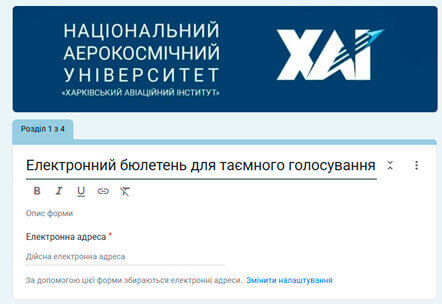
Figure D1.1 – Registration Form for Secret Voting
TO VOTE, AUTHORIZATION IS REQUIRED ONLY USING THE CORPORATE EMAIL!
To vote and proceed to the next ballot, a member of the Academic Council must select one of the response options (“Yes”, “No”, “Abstained”) and click the NEXT button (Figure D1.2).
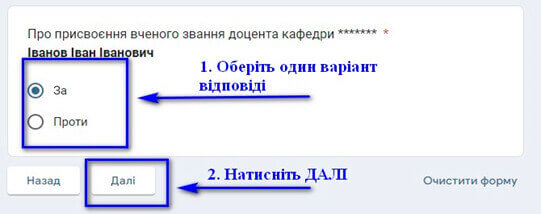
Figure D1.2 – Filling Out the Ballot for Secret Voting
To submit responses for all considered questions, you must select one of the options and click the SUBMIT button (Figure D1.3).
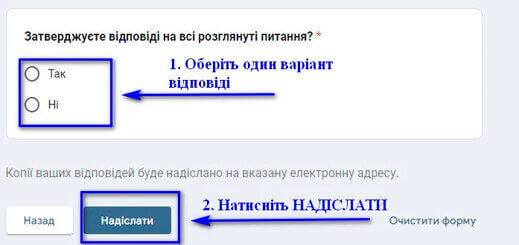
Figure D1.3 – Confirming Responses and Completing Voting
After submitting the vote, the user receives a corresponding notification (Figure D1.4).
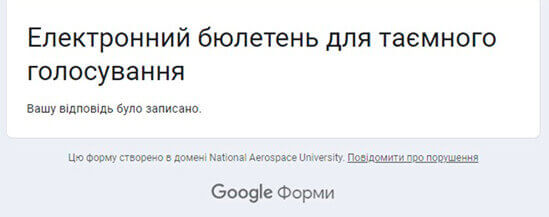
Figure D1.4 – Notification of Successful Voting
After a member of the Academic Council has voted and submitted their response, they can view general information on how the votes are distributed via the link sent to their corporate email (Figure D1.5).
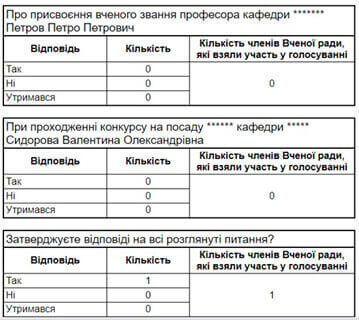
Figure D1.5 – Example of Displaying the Results of the Secret Vote