Regulations on Documented Information Management
at the National Aerospace University
“Kharkiv Aviation Institute”
QMS KHAI-NMD-P/008:2019
Date of Introduction April 20, 2019
Revision No. 3
1. Purpose and Scope of Application
1.1 These regulations establish uniform requirements for the presentation, identification, and structure of documented information (documents) of the quality management system at the National Aerospace University “Kharkiv Aviation Institute” (hereinafter referred to as the University), and define the procedure for their creation, review, approval, implementation, distribution, control, updating, storage, amendment, and withdrawal of obsolete documents from circulation.
1.2 These regulations do not establish requirements for the presentation, identification, and structure of organizational and administrative documents of the University. Requirements for these documents are defined in the University Guidelines on Office Work.
1.3 These regulations establish the procedure for the procurement, identification, amendment, distribution, and withdrawal of obsolete regulatory documents of external origin.
1.4 These regulations do not establish the procedure for the procurement, identification, amendment, distribution, and withdrawal of obsolete legislative acts and organizational-administrative documents of the Ministry of Education and Science of Ukraine and other government bodies.
1.5 These regulations have been developed in accordance with the requirements of clause 7.5 of ISO 9001, DSTU ISO 9001, and clause 7.5 of the Regulations “On the Quality Management System” QMS KHAI-NMD-P/010.
1.6 The requirements of these regulations apply to the activities of the University personnel regarding the creation, review, approval, implementation, distribution, control, updating, storage, amendment, and withdrawal from circulation of obsolete documents of the University quality management system.
2. Normative References
These regulations contain references to the following normative documents:
1) QMS KHAI-QC-RI/001:2015 Instruction “Procedure for the Preparation of Regulations on Structural Subdivisions”;
2) QMS KHAI-NMD-P/0013:2019 Regulations “On the University Quality Management System”;
3) QMS KHAI-NMD-F.UD/001 Form of the internal document development plan;
4) QMS KHAI-NMD-W.UD/001 Template of the quality management system document;
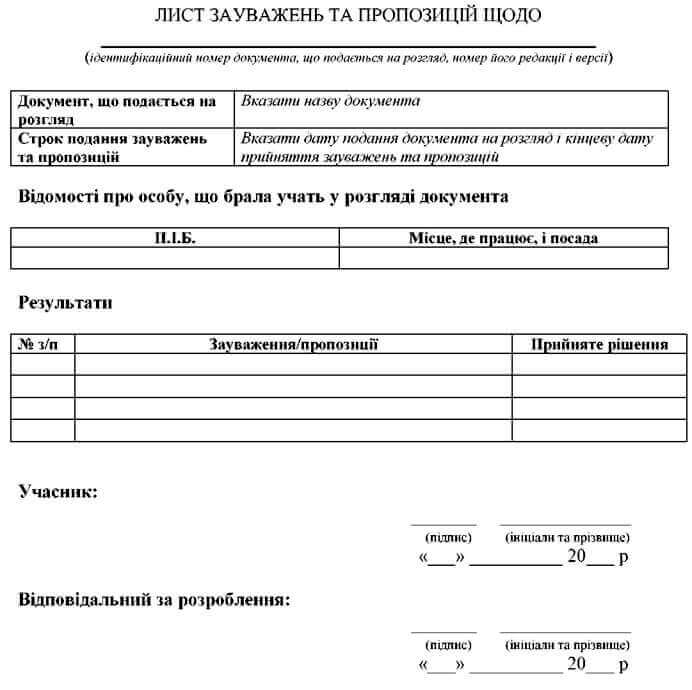
5) QMS KHAI-NMD-F.UD/002 Form of the sheet for comments and proposals;
6) QMS KHAI-NMD-W.UD/001 Template of the quality management system protocol;
7) QMS KHAI-NMD-F.UD/003 Form of the sheet for recording amendments;
8) DSTU ISO 9000:2015 Quality management systems. Fundamentals and vocabulary (ISO 9000:2015, IDT);
9) DSTU ISO 9001:2015 Quality management systems. Requirements (ISO 9001:2015, IDT);
10) DSTU ISO/TR 10013:2003 Guidelines for quality management system documentation (ISO/TR 10013:2003, IDT);
11) Guidelines on Office Work.
3. Terms and Definitions
In these regulations, the terms and definitions given in DSTU ISO 9000 and DSTU ISO/TR 10013 apply, namely:
3.1 data - facts about an object;
3.2 information - meaningful data;
3.3 document - information and its medium;
3.4 documented information - information required to be controlled and maintained by an organization and the medium on which it is contained;
3.5 regulations on the quality management system - a document that regulates the quality management system of an organization;
3.6 quality policy - overall intentions and direction of an organization related to quality as formally expressed by top management;
3.7 regulations - a regulatory legal act that defines the main rules for the organization and activities of its structural subdivisions;
3.8 protocol (record) - a document stating results achieved or providing evidence of activities performed;
3.9 procedure (methodology) - a specified way to carry out an activity or a process;
3.10 job description - a document that defines the labor function of an employee, their rights, and duties;
3.11 work instruction - a detailed description of the process for performing a task and recording results;
3.12 quality objectives - something sought, or aimed at, related to quality;
3.13 form - a document used to record data required by the quality management system;
3.14 document template - a document containing all elements common to various documents of a certain type. The template is used as a model to create new documents of a specific type;
3.15 consensus - general agreement, characterized by the absence of sustained opposition to substantial issues by any important part of the concerned interests and by a process that involves seeking to take into account the views of all parties concerned and to reconcile any conflicting arguments. Consensus does not necessarily imply unanimity.
4. Abbreviations
The following abbreviations are used in these Regulations:
QMS - quality management system;
NMD - educational-methodological department;
QP - quality policy;
QO - quality objectives;
QM - quality manual;
WI - work instruction;
RS - regulations on subdivisions;
SJD - standard job description;
JD - job description;
SR - standard regulations;
R - regulations;
F - document form;
T - document template;
DM - document management.
5. Description of the Procedure
5.1 Process Inputs and Outputs
The inputs of the process are internal information that must be documented, controlled, kept up to date, and maintained, as well as external regulatory documented information.
The outputs of the process are approved and implemented internal documented information, and external regulatory documented information that has been identified and brought to the attention of the personnel.
5.2 Responsibility and Authority
5.2.1 The Chief Quality Manager of the University is responsible for the fulfillment of the requirements of these regulations by the University personnel.
5.2.2 The developer(s) of the document is (are) responsible for its content, compliance with current document formatting requirements, and making amendments to it.
5.2.3 The developer(s) of the document has (have) the authority to request and receive from subdivisions and other employees of the University the information necessary for creating and/or updating the document.
5.2.4 The Quality Manager is responsible for organizing the record-keeping and storage of internal documents of the University QMS.
5.2.5 The Quality Manager is responsible for identifying external regulatory documented information required for the development, implementation, functioning, and improvement of the University QMS.
5.2.6 The Director of the University Scientific and Technical Library is responsible for the procurement and identification of external regulatory documents required for the development, implementation, functioning, and improvement of the University QMS, and for ensuring free access to them for the personnel.
5.2.7 Leaders of structural subdivisions/processes are responsible for familiarizing their subordinates with the requirements of new documents and changes to current documents.
5.2.8 The Head of the Office Work and Archive Department is responsible for the timely distribution of electronic copies of approved internal documents and orders for their enactment.
5.2.9 The Head of the Department of Technical Teaching Aids is responsible for the timely publication of electronic copies of approved documents on the University website.
5.2.10 Employees of the educational-methodological department are responsible for maintaining records and storing the originals (copies) of internal documents of the University QMS.
5.3 General Provisions
5.3.1 General provisions and functions of documented information
5.3.1.1 Documented information management consists in creating conditions that ensure the retrieval and storage of information required by the user, its rapid search, and communication to interested parties within established timeframes and with minimum expenses.
5.3.1.2 The general functions of the QMS documented information are:
- describing the quality management system of the University;
- providing communication between subdivisions for a better understanding of the interrelationships between them;
- informing employees about management commitments regarding quality;
- assisting employees in understanding their role in the organization, deepening their awareness of the significance and importance of their work;
- ensuring mutual understanding between employees and management;
- providing a basis for expectations of proper performance of work;
- setting out how to work in order to fulfill established requirements;
- providing objective evidence that established requirements have been fulfilled;
- ensuring a clear, efficient scheme of functioning;
- providing a basis for training new employees and periodic retraining of staff personnel;
- providing a basis for order and balance within the University;
- ensuring consistency and alignment during the execution of operations on the basis of documented processes;
- providing a basis for the continuous improvement of educational and research services delivery;
- demonstrating capabilities within the University to interested parties;
- providing a basis for conducting quality management system audits;
- providing a basis for evaluating the effectiveness and continuous suitability of the quality management system.
5.3.2 QMS Documentation Structure
5.3.2.1 The University QMS documentation consists of internal and external documents (Appendices A and B).
5.3.2.2 Internal QMS documented information contains the following documents:
- quality policy;
- quality objectives;
- regulations on the quality management system;
- instructions;
- standard regulations;
- regulations on subdivisions;
- regulations;
- standard job descriptions;
- job descriptions;
- rules and procedures;
- organizational and administrative documents (instructions on occupational health and safety, fire safety; internal labor regulations; orders; instructions; internal memos; contractual documents; acts; letters, and faxes);
- forms, protocols, and logbooks;
- templates/blank forms.
5.3.2.3 External QMS documents include:
- laws of Ukraine;
- organizational and administrative documents of the Ministry of Education and Science of Ukraine and other government authorities;
- regulatory documents.
5.3.3 Identification of QMS Documents
5.3.3.1 QMS documents must have appropriate identification numbers. The identification number of a QMS document is a unique alphanumeric code formed according to the principle shown in Fig. 1.
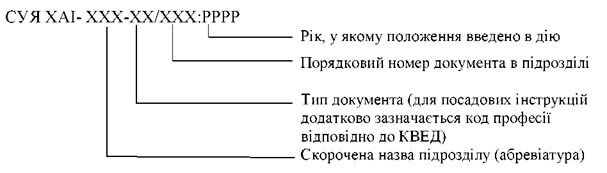
Figure 1 - Structure of the identification number of an internal document at the University
Note 1. In some cases, the abbreviated name of the faculty, dean's office, and department is replaced by a corresponding numerical designation.
Note 2. In some cases, when determining the identification number of a form/template (blank form), an abbreviated name of the process, the results of which are recorded in this document, may be additionally indicated after the document type.
Example: QMS KHAI-NMD-F.IA/001:2019, where IA is the abbreviated name of the “Internal Audit” process.
Note 3. The identification number of a document containing results and/or evidence (protocols, logbooks, etc.) may correspond to its identification number specified in the filing system of the subdivision and/or its serial number.
5.3.3.2 The identification number of an internal document is placed on its title page and in the header on each subsequent page of the document.
5.3.4 Stages of QMS Documented Information Management
5.3.4.1 The process of internal document management includes the following stages:
- planning the development of internal documents;
- development, review, and approval;
- implementation and application;
- review and amendment;
- storage and withdrawal from circulation.
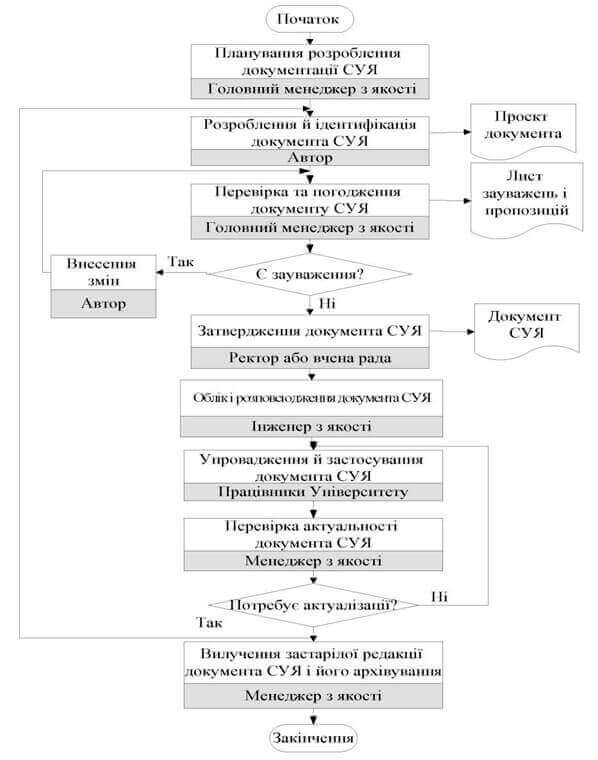
The flowchart of the internal document management process is provided in Appendix A.
5.3.4.2 The process of external document management includes the following stages:
- defining the list and procuring necessary external documents;
- identification of external documents and providing access to them;
- maintaining updates and making amendments;
- storage and withdrawal from circulation.
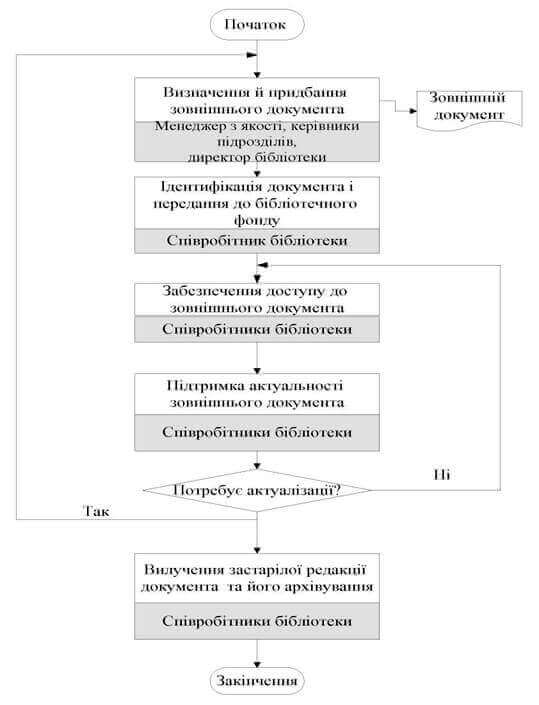
The flowchart of the external document management process is provided in Appendix B.
5.3.5 Risks and Actions for Their Prevention
The list of probable risks that may arise during the stages of document management and actions for their prevention are given in Table 1.
Table 1
| Risks | Risk Prevention Actions |
| 1 Internal Document Management | |
| Stage 1.1 Development, Review, and Approval | |
| The scope of the University QMS documented information is insufficient for its functioning | When determining the scope of the University QMS documented information, it is necessary to analyze the current requirements of legislative acts and regulatory documents regarding the availability of relevant documentation at the University. Determine the list of documents used at the University and assess their compliance with these requirements |
| Application of outdated information during document development | Before starting document development, verify the relevance and adequacy of the information that will be used further |
| The content of the document does not correspond to the competence of the personnel who will apply it | Before starting document development, the level of competence of the personnel who will apply it should be determined |
| Violation of document formatting requirements | Conducting briefing for the document developer(s) on compliance with the document formatting requirements in force at the University |
| Failure to reach consensus during the technical expert evaluation of the document | Empowering the Chief Quality Manager of the University to make management decisions in such situations |
| Stage 1.2 Implementation and Application | |
| The content of the document has not been brought to the attention of the personnel | Review and improve the process of informing personnel |
| The document is not used by the personnel | Conduct unscheduled checks on the document use by personnel. Review and improve the personnel incentive system (introduction of additional penalties) |
| Stage 1.3 Review and Amendment | |
| Non-compliance with the defined periodicity of document review | Monitor the current status of the active document version and plan its review in a timely manner |
| The amendments made to the document are insufficient to achieve the planned results | Before reviewing and approving amendments to the document, it is necessary to evaluate their impact on achieving the planned results |
| Stage 1.4 Storage and Withdrawal from Circulation | |
| Violation of the rules and conditions for storing documented information | Conduct additional briefing for persons responsible for document workflow in subdivisions regarding the rules and conditions for storing documented information |
| Violation of the rules for document withdrawal from circulation | Conduct additional briefing for persons responsible for document workflow in subdivisions regarding the rules for document withdrawal from circulation |
| 2 External Document Management | |
| Stage 2.1 Defining the List and Procuring Necessary External Documents | |
| The defined list of necessary external documents is insufficient for the functioning of the quality management system and the University activities | When determining the list of external documents, it is necessary to analyze the current requirements of legislative acts and regulatory documents in the field of quality management |
| Outdated versions of external documents have been defined | When determining the list of external documents, it is necessary to additionally verify the relevance of external documents |
| Procurement of unofficial copies of external documents | Before purchasing external documents, verify the integrity and reliability of suppliers |
| Stage 2.3 Identification, Accounting of External Documents, and Providing Access to Them | |
| Violation of the rules for identification of external documents | Conduct additional briefing for responsible persons regarding the rules for identification of external documents |
| Personnel do not have access to external documents or access is limited | Periodically check the operability of the electronic literature catalog of the University Scientific and Technical Library and ensure appropriate working conditions with external documents in reading rooms |
| Stage 2.4 Maintaining Relevance of External Documents and Making Amendments to Them | |
| The relevance of external documented information is not controlled | Appoint a responsible person who will monitor the relevance of external documented information and promptly report changes in it |
| Amendments to external documented information are not made | Appoint a responsible person who will make timely amendments to external documented information |
| Stage 2.5 Storage and Withdrawal from Circulation of External Normative Documents | |
| Violation of the rules and conditions for storing external documented information | Conduct additional briefing for responsible persons regarding the rules and conditions for storing external documented information |
| Violation of the rules for external documented information withdrawal from circulation | Conduct additional briefing for responsible persons regarding the rules for external documented information withdrawal from circulation |
5.4 Execution Sequence
5.4.1 Internal Document Management
5.4.1.1 Planning the Development of Internal Documents
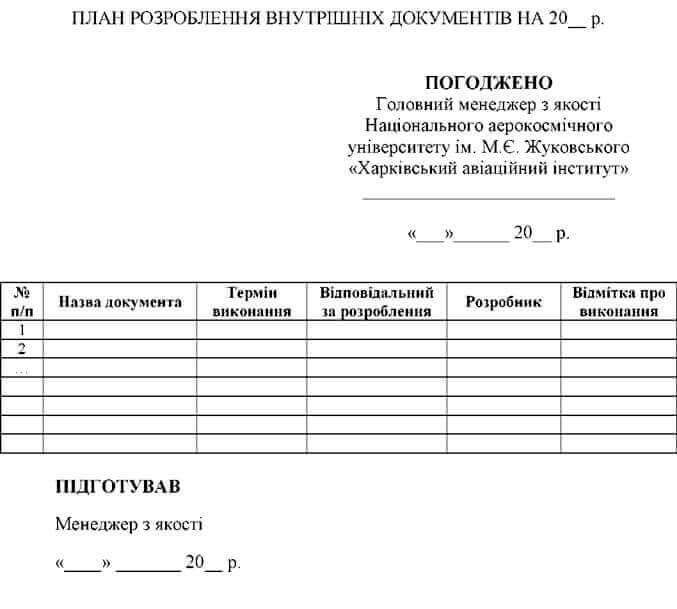
Based on the University quality objectives, results of internal and external quality management system audits, and the management review of the QMS, the Quality Manager annually, by February 01 of the current year, draws up a plan for the development and updating of internal documents and formats it according to QMS form KHAI-NMD-F.ID/001 (Appendix C).
The development plan for internal documents is approved by the Chief Quality Manager.
Within one working day after the approval of the internal document development plan, the Head of the Records Management and Archive Department organizes the distribution of its electronic copy via corporate email to the heads of subdivisions/processes and interested persons specified by the Quality Manager.
In some cases, the planning of internal document development may be performed in the form of University orders.
Based on the results of current internal and external quality management system audits or due to other valid reasons, amendments may be made to the approved plan. Amendments are made by the Quality Manager and approved by the Chief Quality Manager.
Within one working day after the approval of amendments to the plan, the Head of the Records Management and Archive Department organizes the distribution of their electronic copies via corporate email to the heads of subdivisions and interested persons specified by the Quality Manager.
5.4.1.2 Development, Review, and Approval
5.4.1.2.1 Development of Internal Documents
The document is developed by the person(s) specified in the internal document development plan.
The developer(s) determine(s) the identification number, structure, and content of the document and draft(s) its project.
5.4.1.2.2 Formatting of Internal Documents
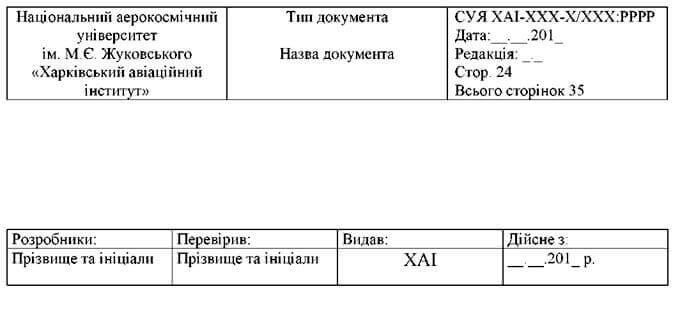
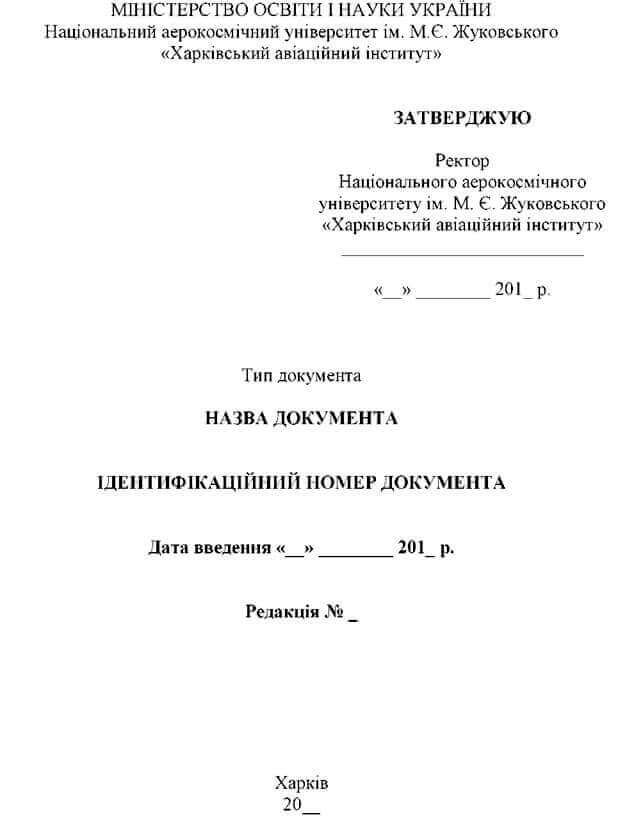
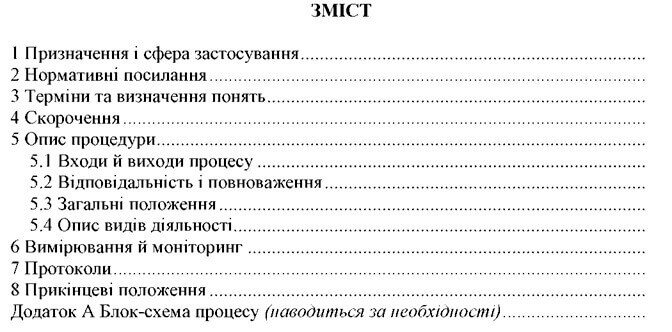
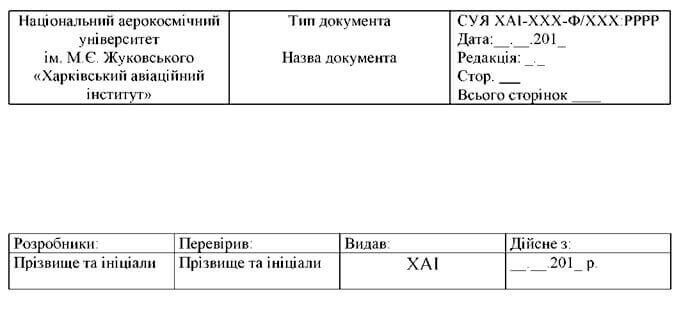
Internal documents of the University QMS are formatted depending on their type according to template QMS KHAI-NMD-T.ID/001 or QMS KHAI-NMD-T.ID/002 (Appendices D, E) or according to the appendix of instruction QMS KHAI-QC-WI/001. They outline the structure of the document and provide explanations of what should be included in each section of the document.
Documents containing results and/or evidence (protocols, logbooks, etc.) are compiled and signed by responsible persons appointed by the Rector's order and/or by the directive of the head of the subdivision/process.
5.4.1.2.3 Review of Internal Documents
The person responsible for document development submits its draft for verification to the Educational and Methodological Department, and for consideration and review — to the Quality Manager, leading specialists, and heads of interested subdivisions/processes. The list of persons participating in the document review is compiled by the person responsible for document development in the form of an internal memo addressed to the Chief Quality Manager of the University. The term for reviewing the draft document shall not exceed 10 working days. To register comments and recommendations, a “Comments and Proposals Sheet,” formatted in accordance with QMS form KHAI-NMD-F.ID/002 (Appendix F), must be attached to the draft document.
The person responsible for document development analyzes the received comments and proposals from the persons who participated in the verification, consideration, and review of the draft document. The results are compiled in a general comments and proposals sheet.
Taking into account the comments and recommendations received during verification, consideration, and review, the developer(s) prepare the second version of the current revision of the draft document, which is also submitted for verification, consideration, and review to the same persons.
The person responsible for document development analyzes the received comments and proposals for the second version of the draft document from the persons who participated in the verification, consideration, and review of the draft document. The results are compiled in a general comments and proposals sheet.
If 10 or more comments and proposals are received for the second version of the draft document, the developer(s) prepare the third version of the current revision of the draft document, which is also submitted for verification, consideration, and review to the same persons.
If fewer than 10 comments and proposals are received for the second version of the draft document, the developer(s) prepare the final version of the current revision of the draft document, which is submitted for approval to the Chief Quality Manager. General comments and proposals sheets for all versions of the draft document are attached to the final version of the document. The draft order on the implementation of the document is prepared by the Chief Quality Manager and submitted, along with the approved revision of the document, to the Rector for approval.
In case of significant discrepancies and comments regarding the third version of the current revision of the draft document, the person responsible for its development submits the project for consideration to a conciliation meeting organized by the Quality Manager. The developer(s) of the document and the persons who participated in the verification and consideration of the versions of the current revision of the draft document must be invited to this meeting. The decision regarding the current revision of the draft document is made by consensus. If the meeting does not reach a consensus, based on the results of the meeting, the Chief Quality Manager decides either to return the current revision of the draft document for revision or to submit the discrepancies for consideration by the University management.
5.4.1.2.4 Approval of Internal Documents
Depending on its scope of application, the Chief Quality Manager submits the reviewed version of the draft document to the Rector or the Academic Council of the University for approval.
The Rector of the University or the Academic Council may introduce changes to the draft document.
The Rector of the University or the Academic Council approves the final draft document. The Rector of the University signs the order on putting it into effect.
Documents containing results and/or evidence (protocols, logbooks, etc.) are approved by the Rector and/or the head of the subdivision/process.
5.4.1.2.5 Registration, Accounting, and Distribution of Internal Documents
An employee of the Educational and Methodological Department, who is responsible for accounting for the quality management system documents, registers the following information about each document in the electronic catalog of documented information of the University QMS:
- title;
- identification number;
- data on the developer(s);
- number of the active revision;
- current status of the document;
- approved by whom;
- number and date of the order on putting it into effect;
- other additional information (if necessary).
A scanned copy of the approved document is posted on the official website of the University within three working days from the date of its putting into effect. The Head of the Educational Technical Media Department ensures its timely posting on the University website. When creating a backup electronic copy of the document, the header shall indicate that the printed version of this document is not active.
Within one working day from the date of its putting into effect, the Head of the Records Management and Archive Department organizes the timely distribution of the electronic copy of the approved internal document and the order on putting it into effect via corporate email to the heads of subdivisions/processes, in accordance with the list of persons defined by the Chief Quality Manager or the Quality Manager.
Documents containing results and/or evidence (protocols, logbooks, etc.) are registered, accounted for, and distributed by a responsible person appointed by the Rector's order and/or by the directive of the head of the subdivision/process.
5.4.1.3 Implementation and Application
Heads of subdivisions/processes ensure that subordinates familiarize themselves with the text of the document within five working days from the date of its putting into effect. After reviewing the text of the document, each employee must put their signature and the date of review in the “Familiarization Log Sheet.”.
Heads of subdivisions/processes ensure and control the appropriate execution of the internal document requirements by the subdivision employees.
Employees of subdivisions whose activities cover the scope of application of the relevant internal document must comply with the requirements of this document when performing their job duties.
5.4.1.4 Review and Amendment
The review of an internal document and making amendments to it is carried out based on the results of internal and external quality management system audits, management review of the QMS, in the event of changes in the structure of the University and/or requirements of external documents based on which a certain document was developed.
The decision to make amendments to an internal document is made by the Chief Quality Manager.
Amendments to an internal document are made by issuing new revisions of the document.
All changes are recorded in the amendment log sheet of the original documents, the form (QMS KHAI-NMD-F.ID/003) of which is given in Appendix G. The amendment log sheet is placed on the last page of the document.
The formatting of the amendment is carried out by the person responsible for document development.
An employee of the Educational and Methodological Department, who is responsible for accounting for quality management system documents in the electronic catalog of documented information of the University QMS, enters data on the amendments to the internal document.
The Head of the Educational Technical Media Department ensures the timely deletion of the canceled revision of the document and the posting of a scanned copy of the approved new revision of the document on the University website within three working days from the date of its putting into effect.
Within one working day from the date of its putting into effect, the Head of the Records Management and Archive Department organizes the timely distribution of electronic copies of the approved new revision of the internal document and the order on putting it into effect via corporate email to the heads of subdivisions.
Heads of subdivisions/processes ensure that subordinates familiarize themselves with the text of the new revision of the document within five working days from the date of its putting into effect. After reviewing its text, each employee must put their signature and the date of review in the “Familiarization Log Sheet.”
Amendments to documents containing results and/or evidence (protocols, logbooks, etc.) are made by a responsible person appointed by the Rector's order and/or by the directive of the head of the subdivision/process, who puts their signature next to the made changes and the date of their entry.
5.4.1.5 Storage and Withdrawal from Circulation of Internal Documents
5.4.1.5.1 Storage of Internal Documents
The approved version of the document (original) is stored in printed form in the Educational and Methodological Department.
The electronic version of the document is stored in the electronic QMS documentation database of the Educational and Methodological Department.
5.4.1.5.2 Cancellation and Withdrawal from Circulation of Internal Documents
The validity of an internal document is canceled by a corresponding order of the University Rector. The draft order is prepared by the Quality Manager based on the results of internal and external quality management system audits, management review of the QMS, as well as written proposals from the interested heads of subdivisions/processes.
After the cancellation of the internal document validity, within three working days from the date of its cancellation, an employee of the Educational and Methodological Department marks its official version with “Canceled f________ date”. The canceled original of the internal regulatory document is not subject to destruction. It is stored in the University Archive.
The electronic version of the canceled document is deleted from the electronic QMS documentation database of the Educational and Methodological Department within three working days from the date of its cancellation.
An employee of the Educational and Methodological Department, who is responsible for accounting for quality management system documents, within three working days from the date of the document cancellation, enters information into the electronic catalog of documented information of the University QMS indicating that the relevant revision of the document has been canceled, the reason for its cancellation, the number and date of the order on its cancellation, and the date from which this revision of the document became invalid.
The Quality Manager controls the execution of the sequence for canceling and withdrawing obsolete internal documents.
Documents containing results and/or evidence (protocols, logbooks, etc.) are stored in the relevant subdivisions in specific case files for the period specified in the filing system of these subdivisions.
5.4.2 External Document Management
5.4.2.1 Defining the List and Procuring External Documents
The Quality Manager defines the list of external regulatory documents in the field of quality necessary for the development, implementation, functioning, and improvement of the University QMS.
Designated employees of the University Scientific and Technical Library annually, at the beginning of the current academic year, based on internal memos from the heads of main structural subdivisions, form a list of periodicals and external regulatory documents necessary for the educational and research activities of the University.
To purchase external documents necessary for the development, implementation, functioning, and improvement of the QMS, the Quality Manager drafts an internal memo addressed to the Director of the University Scientific and Technical Library, providing the following information:
- number and title of the document;
- revision number or year of publication.
The Chief Quality Manager reviews this internal memo and determines the feasibility of purchasing regulatory documents from external authorized organizations, their quantity, and the source of funding.
The Director of the University Scientific and Technical Library organizes the purchase of the listed external documents in accordance with the rules for procurement of relevant literature in force at the University.
5.4.2.2 Identification, Accounting of External Documents, and Providing Access to Them
External documents are identified according to the literature identification system in force at the University Scientific and Technical Library.
Accounting of external documents and providing access to them is organized by the employees of the University Scientific and Technical Library in accordance with the active “Library Regulations”.
5.4.2.3 Maintaining Relevance of External Documents and Making Amendments to Them
Designated employees of the University Scientific and Technical Library monitor the current status of active external regulatory documents, as well as amendments to them, and report the results to the heads of structural subdivisions and interested persons.
Amendments to an external regulatory document are made upon receipt of information about their content from an external authorized organization.
Amendments to copies of external regulatory documents are made by library staff in accordance with the received information.
Accounting for the introduction of amendments to copies of external regulatory documents is performed by a library staff member in accordance with the active “Library Regulations”.
5.4.2.4 Storage and Withdrawal from Circulation of External Documents
5.4.2.4.1 Storage of External Documents
External documents are stored in the University Library under appropriate conditions in accordance with the active rules for the formation and preservation of the library fund.
5.4.2.4.2 Cancellation and Withdrawal from Circulation of External Documents
Cancellation of external regulatory documents is carried out after receiving information about their cancellation from an external authorized organization.
The Director of the University Scientific and Technical Library ensures the withdrawal of the canceled external document from the library fund.
6. Measurement and Monitoring
Control over the execution of the regulations requirements is carried out during internal and external audits of the QMS.
Evaluation criteria:
- the ratio of the number of developed documents that comply with document templates to the total number of developed documents during the reporting period;
- the ratio of the number of documents developed according to the plan to the total number of planned documents during the reporting period;
- compliance with the terms and sequence of distribution and familiarization with documents in structural subdivisions;
- execution of requirements for making amendments to documents in structural subdivisions;
- compliance with the terms and conditions of document storage.
7. Records
7.1 Comments and Proposals Sheets
7.1.1 Identification
Each comments and proposals sheet is assigned an identification number consisting of the identification number of the document under consideration, its revision number, and the version number of this revision.
7.1.2 Storage
Consolidated comments and proposals sheets for each reviewed version are stored together with the approved document in the Educational and Methodological Department for the duration of the document validity.
After the document is canceled, the consolidated comments and proposals sheets for each reviewed version are transferred under an inventory record for storage to the University Archive, where they are kept for five years.
7.2 Minutes of the Conciliation Meeting
7.2.1 Identification
Each minutes of the conciliation meeting is assigned a sequential number.
7.2.2 Storage
The minutes of the conciliation meeting are stored together with the approved document in the Educational and Methodological Department for the duration of the document validity.
After the document is canceled, the minutes of the conciliation meeting are transferred under an inventory record for storage to the University Archive, where they are kept for five years.
8. Final Provisions
8.1 The Regulations are signed by the Chief Quality Manager, approved by the Rector of the University, and put into effect by his order.
8.2 Control over the execution of the Regulations is carried out by the Chief Quality Manager of the University.
8.3 Amendments and additions to the Regulations are reviewed and endorsed by the Chief Quality Manager of the University, approved by the Rector of the University, and put into effect by his order.
Appendix A
Flowchart of the Internal Document Management Process
Appendix B
Flowchart of the External Document Management Process
Appendix C
Form of the Internal Document Development Plan
Appendix D
Template of the Quality Management System Document
D.1 Sheet Layout Template
D.2 Title Page Template
D.3 Table of Contents Form
D.4 Body Text Layout Form
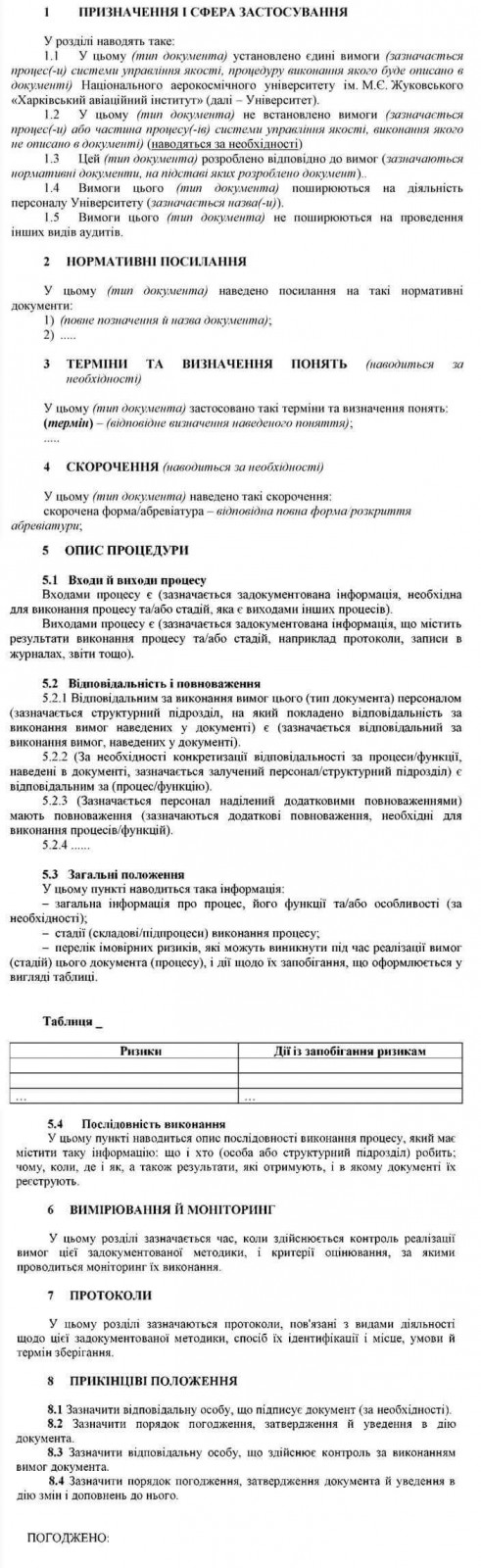
D.5 Appendix Layout Form

Appendix E
Template of the Quality Management System Record
Appendix F
Form of the Comments and Proposals Sheet