
On February 18, 2026, the next meeting of the Academic Council of the National Aerospace University "Kharkiv Aviation Institute" was held in a remote format. In the difficult conditions of martial law, the university community once again demonstrated unity, strategic thinking and responsibility for the development of KhAI.
The first item on the agenda was the election by secret ballot of the Deputy Chairman of the Academic Council. The Head of the Department of Higher Mathematics and System Analysis (No. 405) Nina Savchenko became him.
In the second item on the agenda, the Chief Accountant Olena Kovaliv presented the annual financial report for 2025. Despite difficult economic conditions, the university maintained financial stability, ensured the fulfillment of social obligations and support for the educational process.
The report of the Vice-Rector for Scientific Work Svitlana Dombrovska on the results of the research in 2025 was especially emotional. The report included not only figures and indicators, but also stories about teams that work in difficult conditions, implement international projects, and create innovative solutions for the defense and civilian industries.
Next, new editions of the Regulations “On the Training and Certification Department” (edition No. 2) and the Regulations “On the Development and Modernization of Educational Programs” (edition No. 3) were approved, as well as curriculum templates for 2026 entrants. These documents form a modern, flexible, and competitive education model.
From September 1, 2026, the University will begin training in new bachelor's programs: “Unmanned Robotic Systems” (specialty G7) and “Applied Statistics and Data Management in Commercial Activities” (specialty E8). These programs meet the challenges of digital transformation and the needs of the defense and economic spheres of the state.
It was also necessary to make difficult but necessary decisions to terminate a number of educational programs at the master's and bachelor's levels due to changes in the regulatory framework and in accordance with the resolution of the Cabinet of Ministers of Ukraine. These are not easy steps, but they are aimed at optimizing the educational portfolio and concentrating resources on strategically important areas.
In the block of issues of supporting young scientists, the Academic Council has formed one-time specialized academic councils to defend dissertations of candidates for the degree of Doctor of Philosophy, in particular with the involvement of representatives of leading Ukrainian higher education institutions - Kharkiv National University of Radio Electronics and the National Technical University of Ukraine "Igor Sikorsky Kyiv Polytechnic Institute". Such cooperation contributes to the consolidation of the scientific environment and increases the level of academic responsibility.
The Academic Council focused special attention on the development of the scientific potential of the University and the support of those who are already shaping the intellectual future of the state today. The reviewers of the doctoral dissertation were approved, the topics of numerous postgraduate studies were re-approved, and new scientific supervisors were appointed. The topics of the works ranged from artificial intelligence and cybersecurity to energy, UAVs, and information security.
Traditionally, the Academic Council recommended for publication the next issue of the collection of scientific works “Open Information and Computer Integrated Technologies,” as well as two monographs in the field of public administration under martial law and digital transformation.
Special attention was paid to updating the editorial board of the journal “Journal of Economic Reforms” with the involvement of scientists from Ukraine, Azerbaijan, Moldova, Bulgaria, the Czech Republic, Georgia, and Spain. This is a step towards even greater international presence and scientific cooperation.
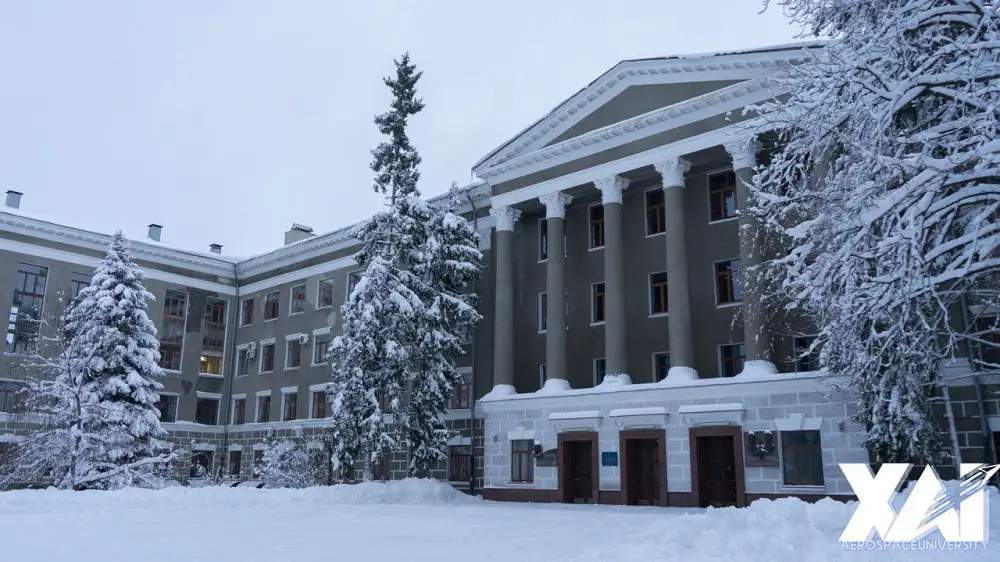
The meeting lasted almost an hour and a half. During this time, dozens of decisions were made that affect the fate of students, scientists, and the future of the University. And outside the window, meanwhile, real winter weather was raging – snow was falling, a cold wind was blowing, and February was raging. However, neither the blizzard nor the difficult circumstances of wartime could shake the main thing – faith in development, in the power of knowledge and joint work. And spring is ahead…