Courage Without Borders: KHAI Students Met with Ukrainian Peacekeepers
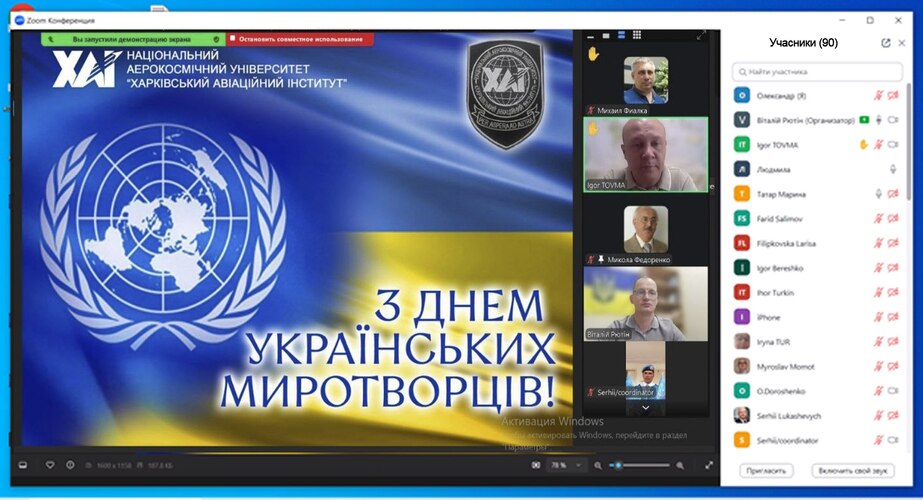
On July 10, 2026, National Aerospace University "Kharkiv Aviation Institute" hosted a ceremonial online event titled "Courage Without Borders," dedicated to Ukrainian Peacekeepers Day.
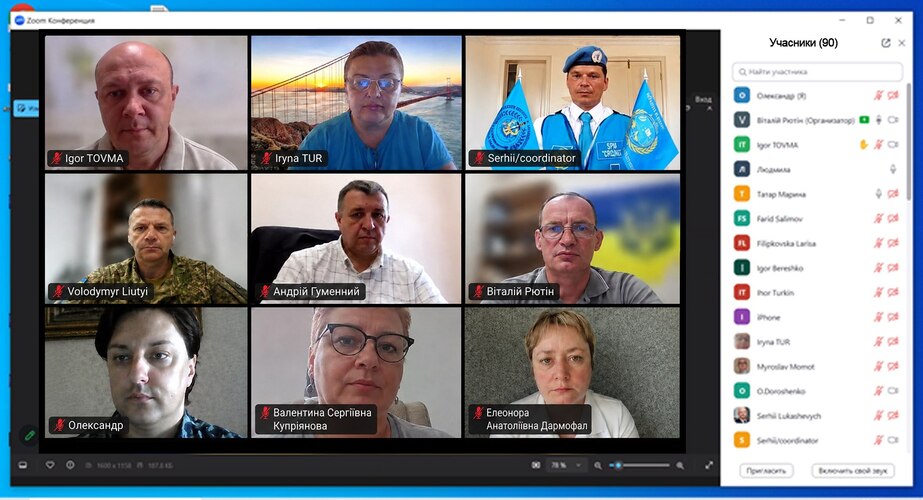
The event brought together 75 participants, including students, academic and teaching staff, and representatives of KHAI structural units. The meeting served as a platform for open dialogue between the university community and Ukrainian peacekeepers who represented Ukraine in international peacekeeping operations under the auspices of the United Nations.
The honorary speakers of the event were Serhii Samoilov—participant in the UN peacekeeping mission in Sierra Leone and the International Coalition Operation in the Republic of Iraq, Director of Youth Programs at the "Soldiers of Peace" International Association of UN Peacekeepers; Oleksandr Doroshenko—participant in the UN mission in Kosovo; Ihor Tovma—Candidate of Military Sciences, Deputy Head of the Institute for Scientific Work at the National Academy of the National Guard of Ukraine, participant in the UN mission in the Republic of South Sudan; and Ihor Prykhodko—Doctor of Psychological Sciences, Professor, Reserve Colonel, participant in the UN mission in Kosovo.
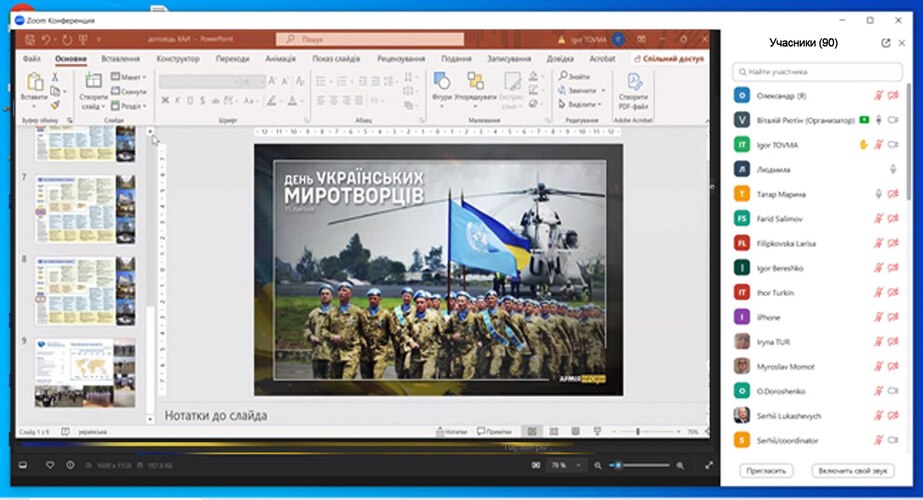
At the beginning of the meeting, participants recalled the history of the Ukrainian peacekeeping movement. It was on July 15, 1992, that Ukrainian service members first set off for a UN peacekeeping mission in Bosnia and Herzegovina, starting a new chapter in the history of the Armed Forces of Ukraine. Over more than three decades, more than 40,000 Ukrainian military personnel have performed peacekeeping missions under the auspices of the UN and other international organizations around the world.
The discussion segment of the event sparked particular interest. Students asked questions that went far beyond military subjects, touching upon moral, humanitarian, and professional aspects of peacekeeping.
When asked about the main lesson learned from serving in international missions, the peacekeepers unanimously stated that human life is the highest value. Respect for people, mutual trust, discipline, and the ability to work in a multinational environment are what prevent conflicts and enable the execution of complex tasks even during crises.
No less relevant was the issue of student involvement in peacekeeping activities. The guests emphasized that modern engineers, analysts, and IT specialists can make significant contributions to international security through scientific research, analytical work, volunteer initiatives, digital technology development, humanitarian projects, and international cooperation. Young people will become the driving force behind Ukraine's post-war reconstruction.
A separate block of the discussion was dedicated to the role of peacekeeping education and diplomacy in restoring de-occupied territories. The speakers stressed that the future rebuilding of the country will require not only modern technological solutions, but also professionals capable of working with communities, restoring trust among people, preventing conflicts, and fostering social cohesion. This is why peacekeeping education carries special significance today.
The topic of the local population's attitude toward peacekeepers elicited a lively discussion. The participants in international missions highlighted that trust does not arise automatically. It must be earned daily through honesty, openness, professionalism, impartiality, and a readiness to help civilians. These qualities build a peacekeeper's authority regardless of the country of deployment.
Information security was also addressed. The peacekeepers explained that the use of social media during international missions is strictly regulated by security protocols, as even minor details can pose a threat to personnel or operation success.
An especially emotional response came when speakers were asked whether they would agree to embark on a peacekeeping mission again, knowing all the risks in advance. Almost all guests answered affirmatively. In their words, serving peace and protecting human life is not just a professional duty, but a personal calling.
The meeting concluded symbolically with the question: "What is a peacekeeper's main weapon—an assault rifle or diplomacy?" The answer was unanimous: weapons are necessary for protection, but a peacekeeper's true strength lies in professionalism, endurance, responsibility, the ability to engage in dialogue, and finding solutions that preserve human lives. Diplomacy, mutual understanding, and trust remain the primary instruments for maintaining peace.
In conclusion, participants emphasized that today Ukrainian service members continue their peacekeeping mission on their native land, defending Ukraine's independence, its citizens, and the right of future generations to live in a free state.
The "Courage Without Borders" event became an essential part of national and patriotic education for KHAI student youth, reaffirming once again that true courage has no borders, and peace begins with everyone's responsibility.